Article Summary: Yes, TR fabric is an excellent choice for suits, especially business wear, office uniforms, formal everyday clothing, and affordable tailored garments. A polyester–rayon or polyester–viscose blend, TR combines the durability and wrinkle resistance of polyester with the softness and drape of viscose, making it a practical alternative to wool in many applications. Textile research, including studies on fabric texture, mechanical properties, and how it is tailored, shows that a suit’s comfort and appearance depend not only on fibre composition, but also on fabric weight, weave, finishing, and construction.
Is TR Fabric Good for Suits?
TR fabric is widely used in suit manufacturing due to its practical balance of appearance, durability, comfort, and cost. It is typically produced by blending polyester (Terylene) with rayon (commonly viscose). The polyester contributes strength, dimensional stability and resistance to wrinkling, while the viscose improves softness, moisture absorption and drape. Together, these fibres can produce a smooth, structured fabric with a wool-like appearance at a more affordable price.
TR fabric can be an excellent choice for business suits, corporate uniforms, hotel staff clothing, school uniforms, and everyday office wear. It is relatively easy to maintain, holds its shape well, and is available in a wide range of colours, patterns, weights, and finishes. These qualities make it particularly attractive to manufacturers producing garments in large quantities and to buyers seeking a consistent fabric supply.
However, TR fabric is not necessarily better than wool or other premium suiting materials. The breathability, thermal comfort, tactile quality, and long-term appearance of the fabric depend on the specific blend ratio and construction. For high-end tailoring, luxury formal wear, or suits intended for hot weather, wool and selected natural fibre blends may be preferable. Ultimately, the best fabric is the one that matches the garment’s purpose, budget, climate, and expected service life.
What Is TR Suit Fabric Made Of?
TR stands for Terylene and Rayon, referring to a blend of polyester and rayon fibres. In modern textile terminology, rayon usually refers to regenerated cellulose fibres, with viscose being one of the most common types used in TR suiting. The precise composition varies depending on the manufacturer, the product design, and the intended application.
Common TR fabric compositions include:
- 65% polyester / 35% viscose: A widely used balance of durability, softness, and cost efficiency.
- 67% polyester / 33% viscose: A similar blend often selected for conventional suiting and uniform applications.
- 80% polyester / 20% viscose: A polyester-rich option emphasizing dimensional stability and wrinkle resistance.
- TR stretch fabric: A polyester–viscose blend with a small proportion of elastane or spandex for additional flexibility.
The blend ratio influences fabric behavior, but it should not be treated as the sole indicator of quality. Two fabrics with identical fiber percentages may perform differently because of yarn count, spinning method, weave density, finishing, and fabric weight. For suit manufacturers, evaluating the complete fabric specification is more reliable than choosing TR based on composition alone.
What Are the Main Advantages of TR Fabric for Suits?
- Good wrinkle resistance and shape retention
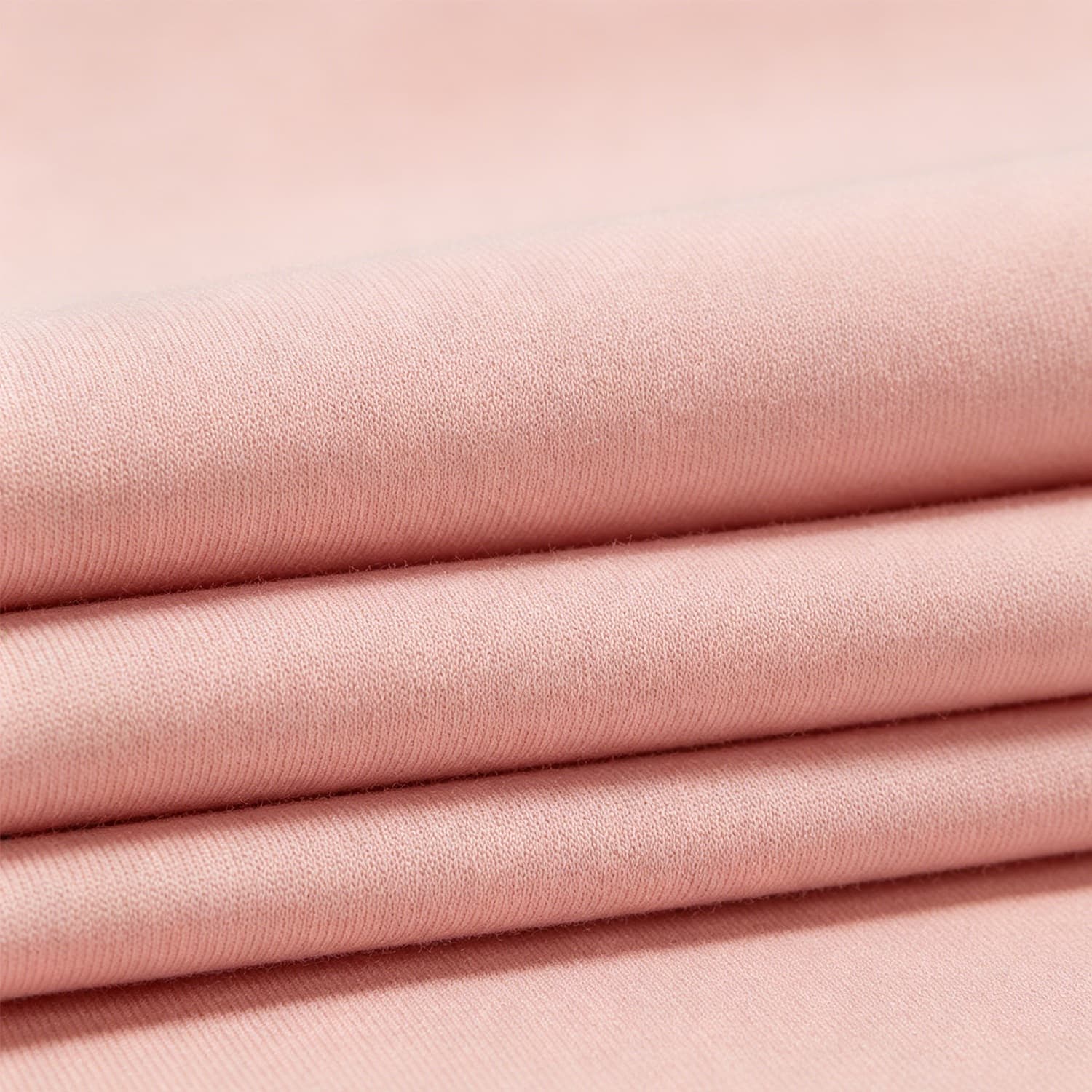
One of the strongest advantages of TR fabric is its ability to maintain a relatively neat appearance during everyday use. Polyester helps the fabric resist creasing and supports dimensional stability, making TR suits suitable for people who commute, travel, work long hours, or wear formal clothing frequently. Compared with many untreated natural-fiber fabrics, a well-constructed TR suit may require less frequent pressing to maintain a professional appearance.
- Comfortable softness and a refined appearance
The viscose component contributes a softer hand feel and helps reduce the stiff, synthetic sensation sometimes associated with 100% polyester fabrics. Depending on the weave and finish, TR fabric can have a smooth surface, fluid drape, or a more structured wool-like character. This versatility allows manufacturers to develop suit fabrics for different silhouettes, from slim-fit office suits to more traditional formal styles.
- Cost-effective for commercial clothing production
TR fabric generally offers a lower material cost than many wool-based suit fabrics, although the actual price depends on yarn quality, weight, finishing, and order volume. This makes it particularly useful for corporate uniforms, hospitality clothing, school uniforms, and value-oriented retail collections. For B2B buyers, it can help balance garment appearance with production budgets and consistent replenishment requirements.
- Wide range of colors and designs
TR fabric can be produced in solid colors, stripes, checks, twill structures, and other woven patterns. Polyester is receptive to disperse dyes, while viscose has different dyeing behavior, so appropriate dye selection and processing are important for achieving consistent shades. With well-controlled dyeing and finishing, TR suiting can provide a broad range of color options for fashion collections and uniforms.
- Practical maintenance
Many TR suit fabrics are relatively easy to care for, although washing and ironing recommendations vary by construction and finish. Compared with delicate premium fabrics, TR may be more convenient for regular workplace use. Nevertheless, excessive heat during ironing can damage polyester-containing fabrics or create surface shine, so care-label instructions should always be followed.
What Are the Disadvantages of TR Fabric?
Although TR fabric offers many practical benefits, there are also limitations that buyers and garment manufacturers should consider before selecting it for suits.
Breathability and thermal comfort: Polyester is less moisture-absorbent than many natural fibres. While viscose improves moisture absorption and comfort, polyester-rich TR fabrics may feel warmer in hot and humid environments. Lightweight construction, appropriate weave density, and breathable garment design can improve comfort.
Pilling and surface wear: Depending on the construction of the yarn, the length of the fibres, the finishing process, and the friction experienced during use, TR fabrics may develop surface pills. Anti-pilling treatments, suitable yarn selection, and testing can improve performance, but results vary between fabrics. Rather than assuming all TR materials have the same durability, buyers should evaluate pilling resistance.
Less natural than premium wool: TR can imitate certain aspects of wool’s appearance, but it may not reproduce its natural elasticity, thermal regulation, or luxurious feel. For high-end bespoke suits, a more desirable combination of drape and comfort may be provided by pure wool or carefully engineered wool blends.
Sensitivity to heat: Polyester is thermoplastic, meaning high temperatures can affect its surface and dimensional characteristics. Improper ironing or pressing can result in shine, distortion, or damage, particularly on dark-coloured suit fabrics. Professional pressing techniques and suitable temperature settings are therefore important during garment production and care.
TR Fabric vs. Wool vs. Polyester: Which Is Better for Suits?
Choosing between TR, wool, and 100% polyester requires evaluating the intended garment, comfort expectations, maintenance needs, and price range. Each material has a distinct performance profile, and no single option is ideal for every suit.
| Feature | TR Fabric (Polyester–Viscose) | Wool Fabric | 100% Polyester Fabric |
| Composition | Polyester + viscose/rayon | Natural wool fibers | Polyester fibers |
| Hand feel | Smooth, soft, versatile | Natural, resilient, premium | Can vary from smooth to synthetic-feeling |
| Drape | Good, depending on construction | Generally excellent in quality suiting | Depends heavily on yarn and weave |
| Wrinkle resistance | Generally good | Good natural wrinkle recovery | Generally very good |
| Breathability | Moderate; depends on blend and weave | Generally very good | Often lower |
| Moisture management | Viscose improves absorption | Naturally absorbs moisture | Relatively low absorption |
| Maintenance | Relatively easy | Often requires more careful care | Usually easy |
| Price | Moderate to economical | Typically higher for quality suiting | Often economical |
| Best applications | Business suits, uniforms, daily formalwear | Premium business and formal suits | Budget uniforms and selected fashion garments |
A study published in the Journal of Natural Fibers (2024), “Investigating the Effect of Elastane Use on Tailorability and Appearance of Wool and Wool Blend Suiting Fabrics,” examined mechanical properties affecting garment construction and appearance. Its findings reinforce an important point for fabric selection: weight, rigidity, elasticity, and mechanical behavior all influence tailoring performance, so fiber content alone cannot determine whether a fabric will produce a good suit.
What Is the Best TR Fabric Weight for Suits?
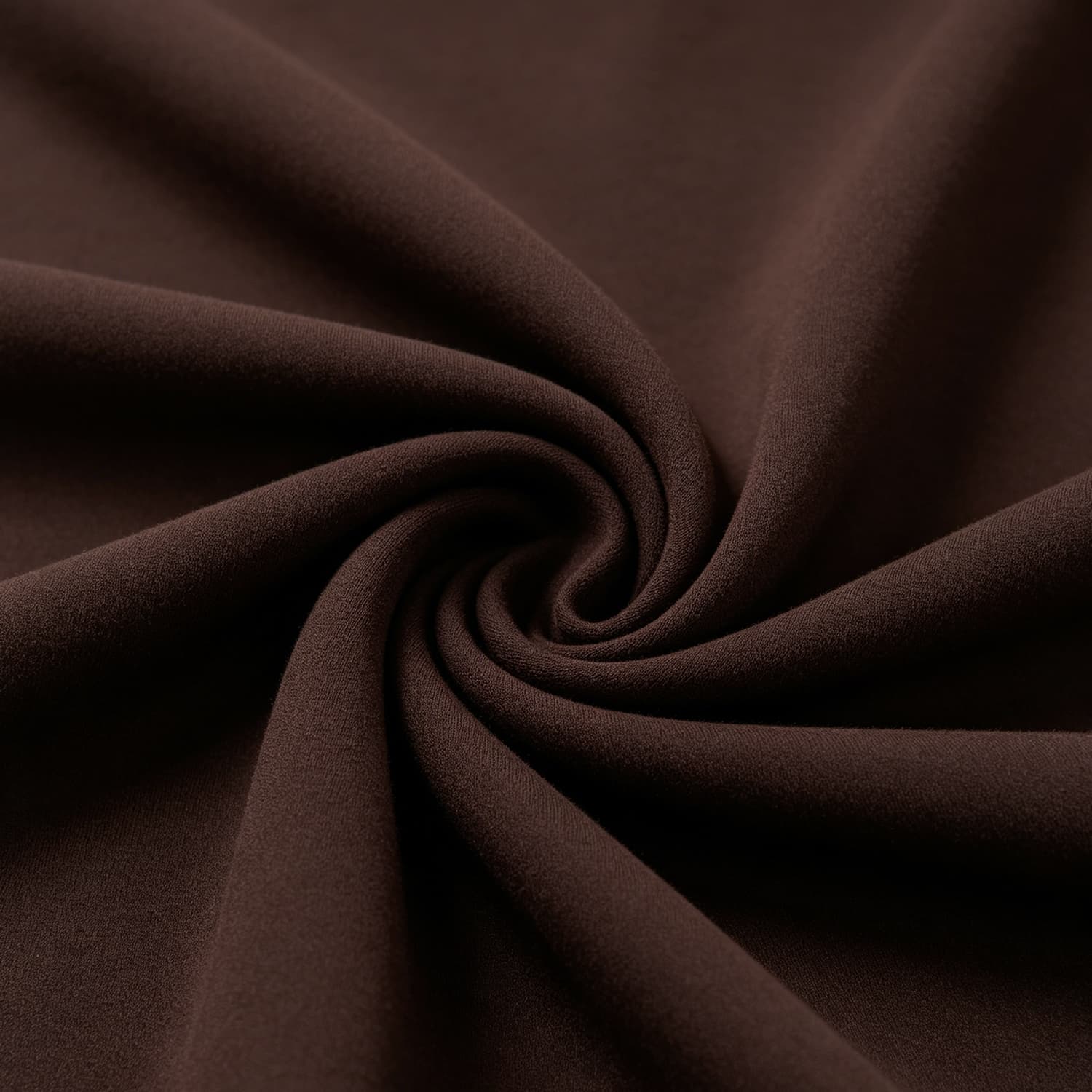
Fabric weight is a critical specification because it affects drape, structure, comfort, and seasonal suitability. In commercial suiting, weight is often expressed in grams per square meter (GSM). A lightweight fabric generally offers greater flexibility and may feel more comfortable in warmer weather, while a heavier construction can provide more body and structure.
The following ranges are general selection guidelines rather than universal industry standards. The ideal weight depends on the weave, yarn construction, lining, tailoring method, and target market.
| Fabric Weight | General Characteristics | Recommended Suit Applications |
| 180–210 GSM | Lightweight, relatively flexible | Summer suits, warm climates, lightweight uniforms |
| 210–250 GSM | Balanced weight and structure | Everyday office suits, businesswear |
| 250–300 GSM | More body and structure | Conventional business suits, formal trousers |
| 300+ GSM | Heavier feel and greater body | Cool-weather suits, structured jackets, selected outerwear |
For most everyday business suits, a medium-weight TR fabric is a practical starting point. Buyers should also examine fabric thickness, air permeability, drape, and recovery because GSM alone does not fully describe comfort or performance. A tightly woven lightweight fabric, for example, may feel less breathable than a more open construction with a similar weight.
How to Choose High-Quality TR Fabric for Suit Manufacturing?
For garment manufacturers, wholesalers, textile sourcing companies, and uniform suppliers, selecting high-quality TR fabric requires a systematic assessment. A fabric that looks attractive on a roll may behave differently during cutting, sewing, pressing, and repeated wear. The following checks can help reduce production risks and improve finished-garment consistency.
- Confirm the fiber composition
Request a clear composition statement, such as 65% polyester and 35% viscose, rather than relying on the general label “TR.” If stretch is included, confirm the elastane percentage and whether it is incorporated into the warp, weft, or both. This information helps manufacturers assess comfort, elasticity, and care requirements.
- Evaluate fabric construction
Examine yarn count, weave structure, density, and finishing. Twill constructions are commonly used in suiting because they can provide a smooth surface and distinctive diagonal texture, while plain and other woven structures may be selected for different visual and functional requirements. Construction should match the intended garment style and price segment.
- Test mechanical and appearance properties
Important tests may include tensile strength, tear strength, dimensional stability, colorfastness, pilling resistance, abrasion resistance, and stretch recovery where applicable. These measurements help determine whether the fabric can withstand production processes and repeated wearing. Suit manufacturers should also check seam slippage, pressing behavior, and surface appearance after finishing.
- Assess drape and tailoring performance
A fabric’s drape influences how a suit hangs from the shoulders and falls across the chest, waist, and legs. The material should be evaluated for bending, shear, stiffness, and recovery, particularly when producing structured jackets or slim-fit trousers. A sample garment or trial cutting can reveal issues that laboratory measurements alone may not capture.
- Request samples and verify batch consistency
Before placing a bulk order, request a representative sample and evaluate it under actual production conditions. Confirm shade consistency, usable width, weight tolerance, finishing quality, and packaging. For repeat orders, retain approved reference samples and establish measurable acceptance criteria to reduce variations between batches.

Is TR Fabric Suitable for Different Types of Suits?
TR fabric’s versatility makes it suitable for several categories of tailored clothing, although specifications should be adjusted to the garment’s intended function.
- Business and office suits: Medium-weight TR fabric is a practical option for daily professional wear because it combines a neat appearance with relatively easy maintenance.
- Corporate and hospitality uniforms: TR is frequently selected for hotel staff, airline-related uniforms, reception teams, and other occupations that require coordinated clothing with consistent color and appearance.
- School uniforms: Its durability, cost efficiency, and availability in standard colors make TR a suitable candidate for uniform programs, provided abrasion and pilling performance meet requirements.
- Fashion suits and slim-fit garments: Stretch TR fabrics may offer additional mobility, but recovery and shape retention should be tested to prevent unwanted bagging or deformation.
- Travel and everyday formalwear: Wrinkle resistance and practical care make TR useful for people who need suits that remain presentable throughout a working day or trip.
For garments worn for extended periods, comfort should be assessed alongside durability. Lining, ventilation, garment construction, and fit can influence the wearer’s experience as much as the fabric composition itself.
Frequently Asked Questions About TR Fabric
- Is TR fabric good for formal suits?
Yes. TR fabric can provide a smooth, structured, and professional appearance suitable for formal and business suits. The quality of the yarn, weave, and finishing determines how refined the final garment looks.
- Is TR fabric better than polyester?
TR generally offers a softer hand feel and better drape than many 100% polyester fabrics because of its viscose content. However, pure polyester may provide advantages in certain applications requiring lower moisture absorption or particular performance characteristics.
- Is TR fabric breathable?
TR fabric has moderate breathability, depending on its polyester–viscose ratio, weave, and density. Lightweight fabrics with suitable construction may offer better comfort in warm weather than dense, polyester-rich materials.
- Does TR fabric wrinkle easily?
TR fabric generally has good wrinkle resistance because polyester helps the material recover and retain its shape. Its actual performance varies with construction, finishing, and garment care.
- Is TR fabric suitable for summer suits?
Yes, lightweight TR fabrics can be suitable for summer suits, especially when designed with appropriate air permeability and comfort in mind. In very hot or humid climates, lightweight wool, linen, or other breathable fabrics may provide greater comfort.
- How should TR fabric suits be washed and ironed?
Care instructions depend on the specific composition and finish, so always follow the garment’s care label. Use appropriate washing conditions and moderate ironing temperatures to reduce the risk of heat damage or surface shine.
Conclusion
TR fabric is a practical and versatile material for manufacturing suits, particularly when durability, wrinkle resistance, ease of maintenance, and cost efficiency are important considerations. Its polyester–viscose composition combines polyester’s structural advantages with viscose’s softness and drape, making it suitable for business wear, corporate uniforms, everyday formal clothing, and value-oriented fashion collections.
However, the quality of a TR suit depends on much more than its fibre composition. The final garment’s appearance and service life are influenced by factors such as fabric weight, weave, yarn quality, finishing, breathability, pilling resistance, and tailoring performance. The best approach for buyers and manufacturers is to evaluate samples, verify technical specifications, and conduct performance testing before making a bulk purchase.
When selected and manufactured correctly, TR fabric can provide an attractive balance of comfort, a professional appearance, and commercial value, making it a reliable choice for a wide range of modern suiting applications.