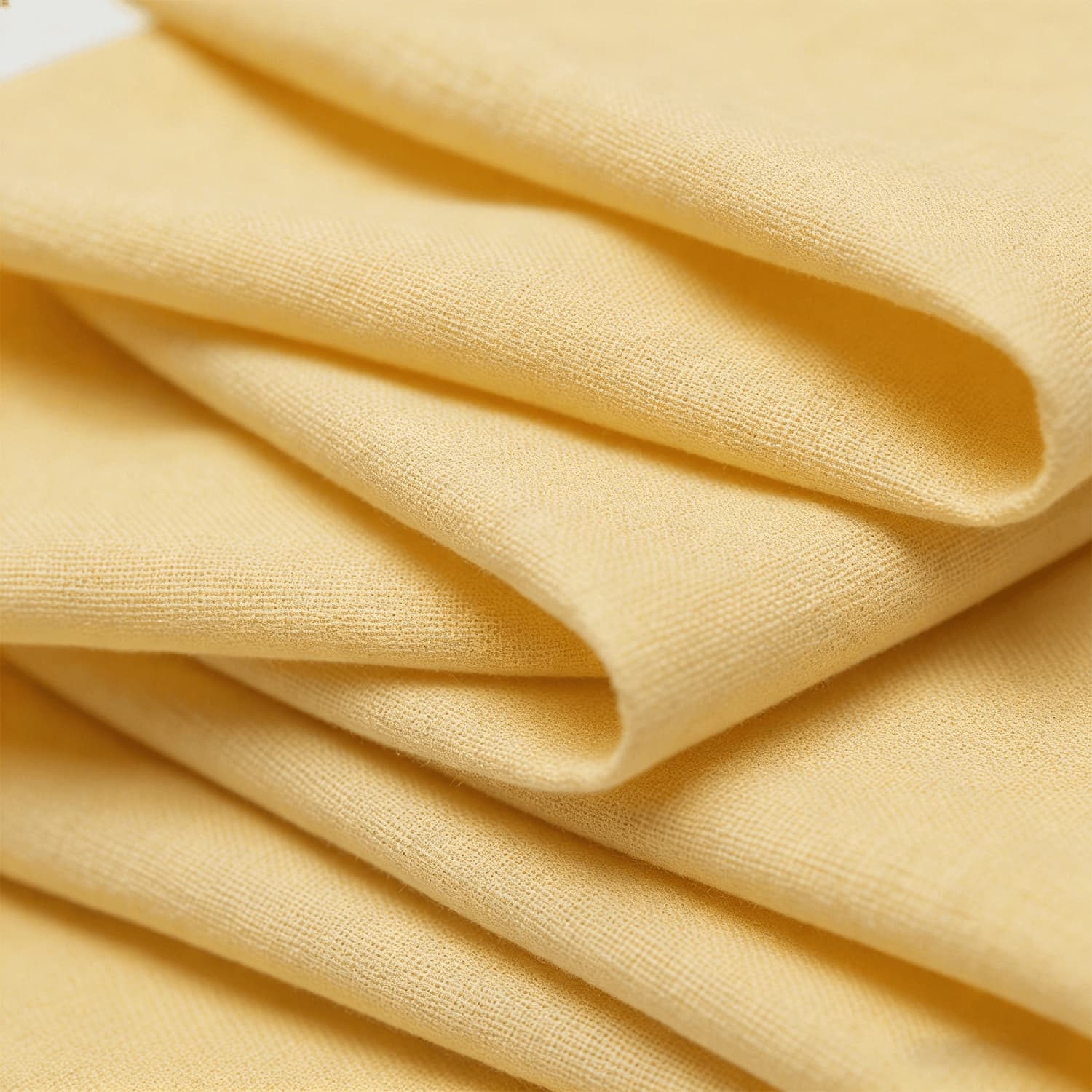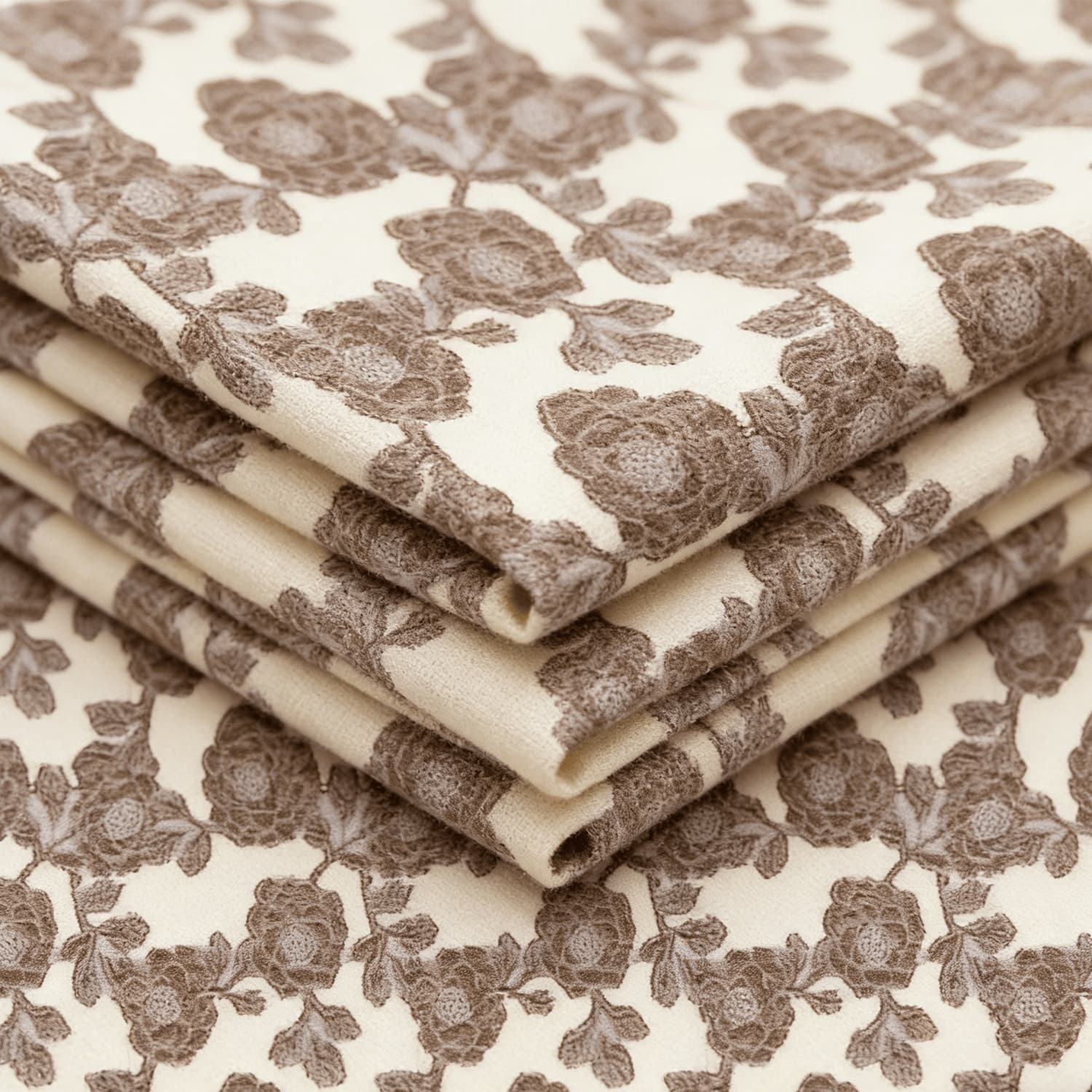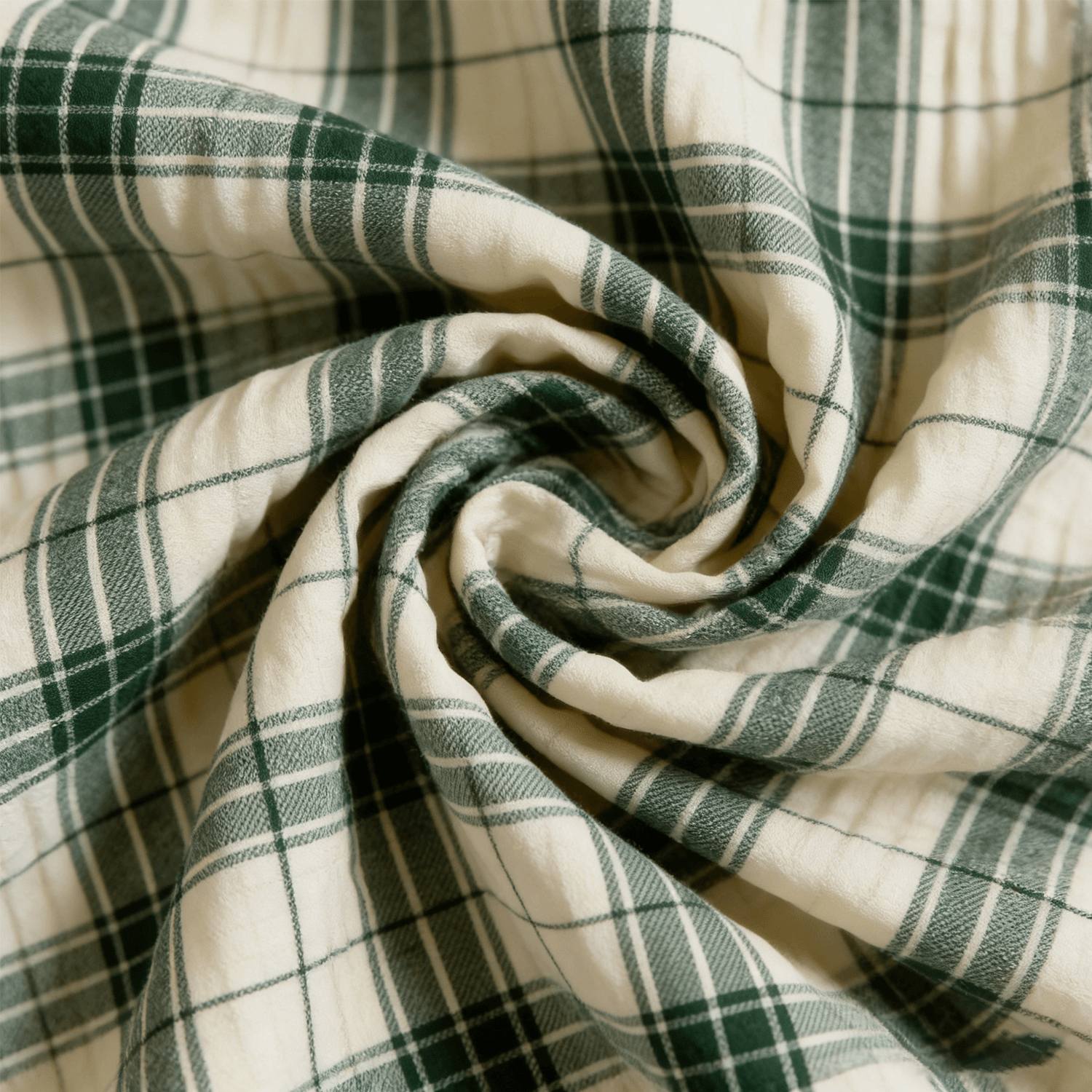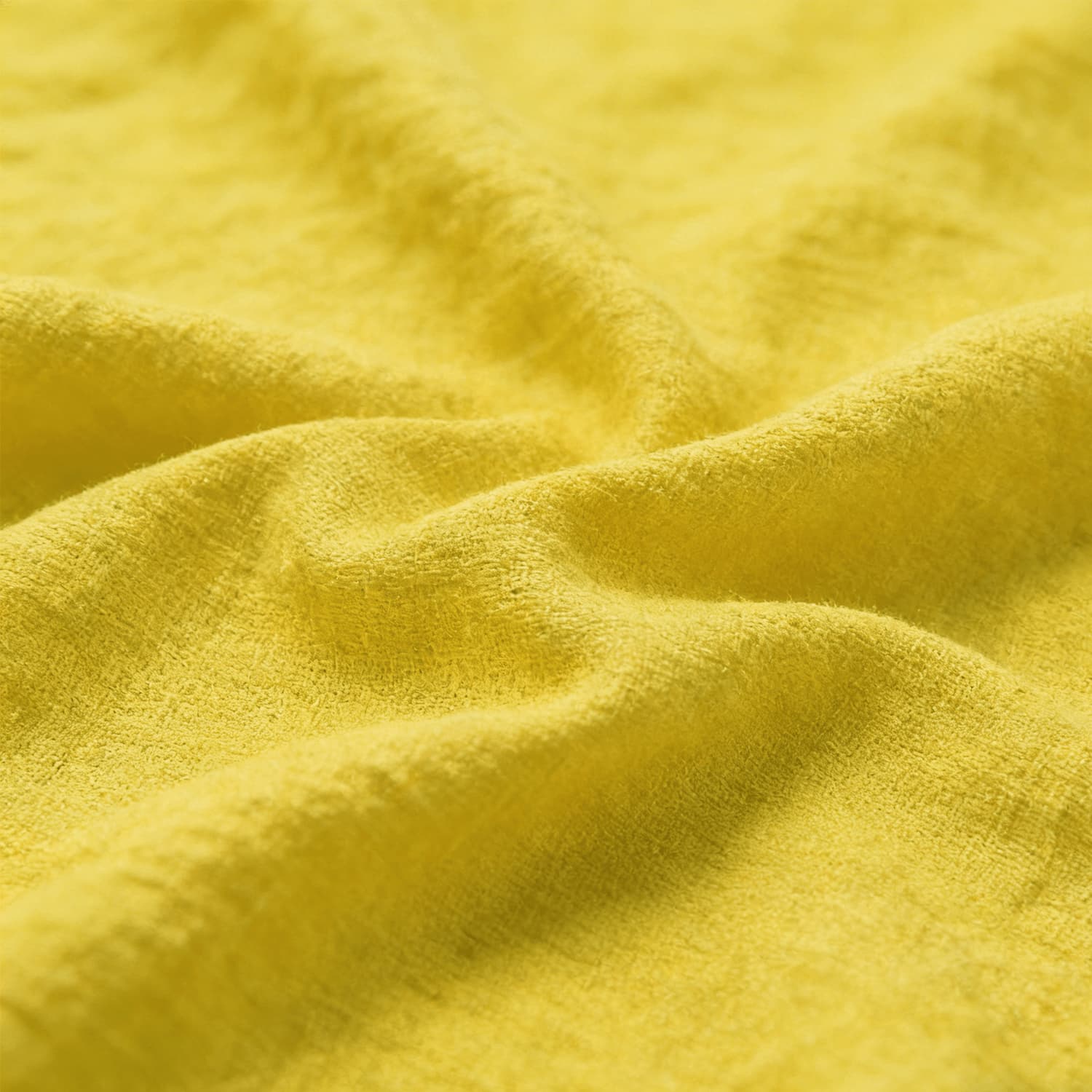
Ramie fabric is a bast fibre textile derived from Boehmeria nivea, a perennial herbaceous plant native to East Asia. It is one of the world’s oldest known fibre crops, with archaeological evidence of ramie textile production in China dating back approximately 5,000 years. This is documented in Kadolph’s Textiles (11th edition, Pearson, 2014) and confirmed by fibre analysis in the Journal of Natural Fibres (Vol. 17, 2020).
According to the ‘Handbook of Natural Fibres’ (edited by Kozłowski, Woodhead Publishing, 2nd edition, 2020), ramie’s tensile strength exceeds that of cotton by a factor of approximately eight when dry, increasing a further 25% when wet. This places it among the strongest commercially available plant-based textile fibres — yet, despite this extraordinary strength, the fibre’s relatively low elasticity and sensitivity to repeated mechanical flexing demand specific laundering techniques to avoid fibre fracture and garment distortion. Both the American Association of Textile Chemists and Colorists (AATCC) Technical Manual and the ISO 3758:2012 care labelling standards classify ramie as a cellulosic fibre requiring care similar to that for linen, involving washing in cool-to-warm water, avoiding high-heat drying and following careful ironing protocols to preserve the structure of the fibre and its characteristic natural lustre.
What Is Ramie Fabric? Definition, Fiber Origin, and Global Context
Ramie fabric is produced from the long, lustrous fibres extracted from the inner bark of the Boehmeria nivea plant, commonly known as China grass or white ramie. It is also produced from the inner bark of the Boehmeria tenacissima plant, known as green ramie or rhea, which is a close botanical relative of the former. The plant belongs to the Urticaceae (nettle) family and thrives in warm, humid climates, with China, the Philippines, Brazil, South Korea and parts of Southeast Asia representing the main commercial growing regions today. According to FAO statistical data on natural fibre crops (FAO, 2022), China alone accounts for approximately 70–80% of global ramie fibre production, making it the dominant force in the ramie supply chain from raw fibre to finished textile.
The textile fibre itself is extracted through a process called decortication, in which the outer bark of harvested ramie stalks is stripped away and the remaining inner bast material is degummed — a process involving the removal of the gums, pectins, and resins that bind the individual fibre bundles together in the plant, using either chemical or biological methods. Historically, this degumming stage has been labour-intensive, which is one of the primary reasons that, despite its exceptional fibre properties, ramie has never achieved the commercial scale of cotton or linen globally. The resulting individual fibre cells — long, unicellular structures with very thick walls and a highly crystalline cellulose content — give ramie its outstanding mechanical properties.
The Handbook of Natural Fibres (Kozłowski, 2020) identifies the following key physical characteristics of processed ramie fiber that directly influence how the finished fabric performs and how it must be cared for:
① Fiber length — Individual ramie fiber cells range from 60 to 250 mm in length (averaging approximately 150 mm), making them among the longest natural textile fiber cells known — significantly longer than cotton (25–35 mm) and comparable to the longest grades of flax/linen.
② Tensile strength — Ramie fiber has a dry tenacity of approximately 6.0–7.5 g/denier, rising to 7.5–9.5 g/denier when wet, which represents a wet-strength increase of roughly 25% — the opposite of wool (which loses strength when wet) and a distinguishing feature shared with linen.
③ Cellulose crystallinity — Ramie contains among the highest proportions of highly crystalline cellulose of any natural fiber, with crystallinity indices above 75% reported in Carbohydrate Polymers (Vol. 234, 2020), contributing to its stiffness, low elongation at break (approximately 3–7%), and resistance to microbial degradation.
④ Moisture regain — Ramie has a moisture regain of approximately 12% under standard atmospheric conditions (65% RH, 20°C), comparable to linen and substantially higher than polyester (~0.4%), meaning it is naturally breathable and comfortable in warm weather but requires attention to drying conditions to prevent mildew in humid environments.
These fiber-level characteristics translate directly into the performance attributes that define ramie as a textile: it produces fabric that is cool, absorbent, smooth, and naturally lustrous, with a slightly stiffer hand than cotton or linen that softens progressively with washing. Its high crystalline cellulose content also makes it resistant to bacteria and mildew, which partly explains its historical use in tropical climates.
How Is Ramie Fabric Made? From Fiber to Finished Textile
The journey from harvested ramie plant to finished woven fabric involves several technically complex manufacturing stages, more so than cotton processing. Understanding this production pathway clarifies why ramie fabric has specific performance characteristics and care requirements that differ from other natural fibre textiles.
Harvesting and retting: ramie stalks are usually harvested two to four times a year, depending on the growing region and climate. This involves cutting the plants at ground level when they are approximately 1–1.5 metres tall. Unlike flax, ramie does not undergo traditional water retting, whereby the stem is broken down by soaking it in water. Instead, the outer bark is stripped mechanically in the field or at a processing facility using decortication machinery, exposing the ribbon of bast fibre beneath. This mechanical decortication step distinguishes ramie processing from that of most other bast fibre crops.
Degumming: the raw bast ribbon extracted from decortication contains 25–35% non-cellulosic material (primarily pectin, hemicellulose, lignin and gummy substances), which must be removed before the fibre can be spun. This is achieved through alkaline chemical treatment (typically sodium hydroxide at elevated temperatures, sometimes followed by bleaching), enzymatic treatment using pectinase-based bioprocesses (increasingly adopted for environmental reasons, as documented in Bioresource Technology, Vol. 295, 2020) or a combination of both. The completeness and uniformity of degumming directly affect the softness, whiteness, and spinnability of the resulting fibre — incomplete degumming produces a harsh, rough fabric that cannot be adequately softened in consumer laundering.
Spinning and weaving: Degummed ramie fiber is processed on textile machinery adapted for long-staple bast fibers, typically on cottonized ramie lines (where the fiber is shortened and processed on cotton spinning systems) or on dedicated wet-spinning systems that can handle the full fiber length. The resulting yarns are woven or knitted into a range of fabric constructions — from plain-weave shirting fabrics and denim-weight apparel textiles to blended fabrics that combine ramie with cotton, linen, silk, or synthetic fibers to modify the hand and performance characteristics.
Finishing: Finished ramie fabrics are typically mercerized (treated with caustic soda under tension to increase luster and dye uptake), bleached, and may receive softening treatments to reduce the natural stiffness of the fiber. However, because ramie’s stiffness is partly inherent to its high cellulose crystallinity rather than purely a function of surface finishes, softening treatments provide only partial and temporary improvement: the fabric tends to recover some stiffness after laundering.
Ramie Fabric Properties: Performance Characteristics Compared
Understanding how ramie fabric performs in practical use requires comparing its key properties against other major natural fiber textiles. The following table provides a structured comparison using data from Kadolph’s Textiles (11th ed., 2014), the Handbook of Natural Fibres (Kozłowski, 2020), and published fiber property databases from the Journal of Natural Fibers.
Ramie Fabric vs. Key Natural Fiber Textiles — Property Comparison
| Fiber source | Boehmeria nivea (bast) | Gossypium spp. (seed hair) | Linum usitatissimum (bast) | Bombyx mori (protein filament) | Sheep fleece (protein fiber) |
| Dry tensile strength | ~6.5–7.5 g/den | ~3.0–4.9 g/den | ~5.5–6.5 g/den | ~4.0–5.0 g/den | ~1.0–1.7 g/den |
| Wet strength change | +25% (increases) | +10% (increases) | +20% (increases) | −15% (decreases) | −30–40% (decreases) |
| Elongation at break | 3–7% (very low) | 7–9% | 2–3% | 15–25% | 25–35% |
| Moisture regain (65% RH) | ~12% | ~8.5% | ~12% | ~11% | ~16% |
| Resistance to mildew | Excellent | Moderate | Good | Moderate | Poor |
| Resistance to bacteria | Excellent | Moderate | Good | Moderate | Good |
| Typical hand/feel | Smooth, cool, slightly stiff | Soft, warm | Smooth, cool, crisp | Smooth, warm, lustrous | Soft, warm, sometimes scratchy |
| Care sensitivity | Moderate (wrinkle-prone, low elasticity) | Low (very forgiving) | Moderate (similar to ramie) | High (delicate) | High (shrink-prone) |
| Typical blends | Cotton/ramie, linen/ramie | Poly/cotton, linen/cotton | Cotton/linen, ramie/linen | Silk blends | Wool/synthetic |
Sources: Kadolph (2014); Kozłowski ed. (2020); Journal of Natural Fibers Vol. 17 (2020); AATCC Technical Manual (2023).
Several properties in this table have direct implications for washing and care. Ramie’s very low elongation at break (3–7%) means that the fabric has virtually no stretch to absorb mechanical stresses during laundering: when agitated vigorously in a washing machine, individual ramie fibers — particularly at weave interlacing points — can fracture microscopically, producing a progressive surface roughening and eventual fabric degradation over repeated machine-wash cycles. This is why hand washing or delicate machine cycles are universally recommended for pure ramie garments. The fabric’s high wet strength, by contrast, means that washing itself does not weaken the fiber structure the way it does with silk or wool — the challenge is mechanical damage from agitation, not fiber dissolution in water.
How to Wash Ramie Fabric: Step-by-Step Care Guide
Washing ramie fabric correctly preserves its natural luster, dimensional stability, and fiber integrity across hundreds of washes. The care principles that follow are grounded in AATCC Technical Manual methodology and ISO 3758:2012 care labeling standards, and they apply to pure ramie garments and ramie-dominant blends (i.e., those where ramie constitutes more than 50% of the fiber content by weight).
Step ① — Read the care label first. All ramie garments sold in markets governed by ISO 3758 (international) or ASTM D5489 (USA) care labeling standards carry sewn-in labels with symbols specifying the maximum wash temperature, tumble dry setting, iron temperature, and professional care instructions validated by the manufacturer. These symbols should take precedence over general guidance, because finishing treatments, dyes, and blend compositions can modify the base fiber’s care requirements. A ramie/silk blend, for example, requires silk-appropriate care despite ramie’s greater robustness.
Step ② — Pre-treat stains before washing. Apply a small amount of liquid, pH-neutral detergent directly to any stained area and work it gently into the fabric using a fingertip or soft brush. Allow the pre-treatment to stand for 5–10 minutes before washing. Do not use enzyme-based stain removers on ramie/protein-fiber blends (ramie/silk, ramie/wool) as the protease enzymes can degrade silk and wool components while leaving the ramie unaffected — producing uneven surface texture.
Step ③ — Select water temperature carefully. Pure ramie fabric can tolerate warm water washing (up to 40°C / 104°F) without significant fiber damage, since ramie’s cellulosic structure is relatively stable within the temperature ranges used in domestic laundering. However, higher temperatures (above 50°C / 122°F) can accelerate color fading in dyed ramie fabrics and may affect resin-based finishing treatments that contribute to wrinkle resistance. For standard care, 30°C (86°F) cold-to-warm water is appropriate for most ramie garments; for heavily soiled items, 40°C is acceptable provided the care label permits it.
Step ④ — Choose the right washing method. Hand washing is the gold standard for ramie garments, particularly those with structured construction (blazers, tailored pieces, embellished items). Machine washing in a mesh laundry bag on a delicate or gentle cycle with reduced spin speed is acceptable for simpler ramie constructions — T-shirts, casual shirting, knitwear blends — provided the care label does not prohibit it. The critical variable is mechanical agitation: standard cotton or synthetics wash cycles generate agitation forces that exceed what ramie’s low-elongation fiber structure can repeatedly absorb without microscopic fracture at stress points.
Step ⑤ — Select an appropriate detergent. Use a liquid, pH-neutral detergent formulated for delicate or natural fiber fabrics. Detergents with alkaline pH above 9.0 — common in powder-format heavy-duty detergents — can over-soften the cellulosic structure of ramie over time, contributing to pilling and surface distortion. Avoid fabric softeners in the wash cycle for pure ramie: they coat the fiber surface and progressively dull the natural luster that is one of ramie’s defining aesthetic qualities. If a softening effect is desired, a brief rinse with diluted white vinegar (approximately 50 ml in a full rinse basin) slightly reduces the post-wash stiffness without the residue buildup of silicone-based fabric softeners.
Step ⑥ — Rinse thoroughly and remove water gently. Incomplete detergent removal in ramie fabric causes visible stiffness and can leave a whitish film on the fabric’s surface weave. Rinse in water of similar or slightly cooler temperature than the wash cycle — sudden temperature changes can cause minor dimensional distortion in cellulosic fabrics. To remove water after hand washing, press and squeeze the fabric gently — never wring — and then roll the garment in a clean, dry towel and press firmly to absorb remaining moisture before laying flat or hanging to dry.
Step ⑦ — Dry correctly. Lay flat on a clean, dry surface or hang on a padded hanger to dry at room temperature, away from direct sunlight (which causes progressive photooxidation of cellulosic fibers, leading to yellowing) and away from direct heat sources. Do not tumble dry ramie in a conventional dryer: the combination of heat, tumbling action, and low-humidity air accelerates the same fiber fracture at interlacing points that aggressive machine washing produces, and the heat can set dimensional changes caused by the washing process before the fabric has the opportunity to relax to its original geometry.

Ironing, Wrinkle Management, and Long-Term Storage
Ramie fabric wrinkles more easily than cotton but comparably to linen because its high cellulose crystallinity produces fibre rigidity that resists the fibre-level deformation needed to accommodate the folds that constitute wrinkles. This is not a defect of ramie, but a characteristic of all natural cellulosic fibres with a high crystallinity. It can be managed effectively through appropriate ironing and storage practices.
ISO 3758:2012 and the AATCC guide specify an iron symbol with two dots for ramie fabric (corresponding to a maximum sole plate temperature of approximately 150°C/300°F), which is the same setting recommended for cotton. In practice, ramie irons most effectively at a temperature slightly above the two-dot setting while the fabric is still damp from washing — the combination of residual moisture and moderate heat enables the crystalline cellulose structure to relax and adapt to the new shape imposed by the iron. Ironing bone-dry ramie at lower temperatures is possible, but it requires more passes and pressure, which increases the risk of shiny press marks being created on the fabric’s surface. Where possible, always iron on the reverse (wrong) side of the fabric, or use a damp pressing cloth over the face of the fabric to diffuse heat and eliminate the risk of shine.
Steam ironing — A steam iron or garment steamer is highly effective on ramie fabric: the steam penetrates the fabric structure, temporarily plasticizing the cellulose crystalline regions and allowing wrinkles to be set out efficiently. A handheld fabric steamer operated at a distance of 10–20 cm from the fabric surface is a practical travel alternative for relaxing wrinkles in ramie garments without the risk of shine or heat damage associated with direct iron contact.
Wrinkle-resistant ramie blends — The textile industry has developed wrinkle-resistant ramie fabric constructions through two main approaches: blending with polyester or nylon (which contribute elastic fiber recovery) and applying resin-based durable press finishes (analogous to those used in easy-care cotton). Ramie/polyester blends in approximately 55/45 or 60/40 ratios show substantially improved wrinkle recovery compared to pure ramie, as measured by AATCC Method 66 (wrinkle recovery angle), though the characteristic ramie luster and breathability are somewhat reduced in proportion to the polyester content.
Storage — Store clean, dry ramie garments folded with minimal sharp creases, or hang tailored pieces on padded hangers in a breathable garment bag. Unlike wool or silk, ramie is not vulnerable to moth damage (moths target protein fibers, not cellulosic ones), so standard storage without pest protection is appropriate. However, ramie’s high moisture absorption means that storing ramie garments in humid environments without adequate air circulation creates mildew risk — even though the fiber itself is highly mildew-resistant, surface soiling, residual perspiration, and environmental particulates can provide substrates for mold growth on the fabric surface. Storing in clean, dry conditions with adequate air circulation is the standard recommendation.
Ramie Fabric in Modern Applications: Sustainability, Blends, and Market Context
The renewed interest in ramie fabric in the contemporary fashion and home textiles markets is substantially driven by sustainability considerations. Ramie is a fast-growing perennial crop that requires no replanting after the first year, produces two to four harvests a year from the same root system and has lower pesticide and herbicide requirements than conventional cotton. It also has the significant environmental advantage of producing no synthetic microfibres when washed, unlike polyester and other synthetic textiles.
A lifecycle assessment of natural fibre crops published in The Journal of Cleaner Production (Vol. 303, 2021) positioned ramie favourably in terms of greenhouse gas emissions per kilogram of processed fibre compared to conventionally grown cotton. Ramie’s multi-harvest annual cycle gives it a particularly strong performance in terms of land-use efficiency. This environmental profile, combined with growing consumer awareness of the sustainability credentials of textiles and the emergence of Chinese ramie production within brands’ Asian supply chain networks, has established ramie as a credible alternative to cotton and linen in the premium sustainable apparel segment.
Ramie Fabric Care Reference Guide — ISO 3758 / AATCC Standards
| Wash method | Hand wash preferred; delicate machine wash acceptable | Delicate machine wash or hand wash | Hand wash only | Machine wash, gentle cycle |
| Water temperature | 30–40°C (86–104°F) | 30–40°C | 30°C (86°F) cold only | 30–40°C |
| Detergent type | pH-neutral liquid, no enzymes | pH-neutral liquid | pH-neutral, silk-safe | pH-neutral liquid |
| Spin speed (machine) | Low (400–600 rpm) | Low to medium (600–800 rpm) | Do not machine spin | Medium (600–800 rpm) |
| Tumble drying | Do not tumble dry | Do not tumble dry | Do not tumble dry | Low heat, brief cycle only |
| Drying method | Flat dry or padded hanger; room temperature | Flat dry or hang; room temperature | Flat dry only; away from sunlight | Hang dry; can tolerate brief low-heat tumble |
| Iron temperature | Two-dot (max. 150°C / 300°F); damp preferred | Two-dot; damp preferred | One-dot (max. 110°C / 230°F) with pressing cloth | One-dot; use pressing cloth |
| Steam ironing | Recommended | Recommended | Low-moisture steam only; distance 20+ cm | Acceptable; moderate steam |
| Bleaching | Non-chlorine bleach only, if needed | Non-chlorine bleach only | Do not bleach | Non-chlorine bleach only |
| Dry cleaning | Acceptable (circle P) | Usually not required | Circle P recommended | Usually not required |
Sources: ISO 3758:2012; ASTM D5489-21; AATCC Technical Manual (2023), Method 135 (dimensional changes), Method 66 (wrinkle recovery); Kadolph (2014).
The ramie textile market is also evolving through innovation in fiber processing. New enzymatic degumming technologies that reduce chemical usage, cottonization processes that make ramie processable on standard short-staple cotton spinning equipment (dramatically reducing the machinery investment barrier for mills), and developments in ramie/bio-based fiber blends are collectively expanding the range of fabric constructions available to designers and buyers. As of 2023–2024, ramie fabric appears in product lines across multiple global fashion brands in both pure and blended constructions, and its representation in the natural fiber sustainability narrative is growing alongside bamboo, hemp, and lyocell as alternatives to cotton-dominant supply chains.
FAQ: Ramie Fabric
Q1: Is ramie fabric soft or scratchy?
Pure ramie fabric tends to feel slightly stiff and moderately coarse when new, particularly in heavier woven constructions, because of the high crystallinity of the fiber — but it softens noticeably with repeated washing and wear, eventually developing a hand comparable to well-washed linen. Ramie/cotton blends feel softer from the start because the cotton fiber provides elastic cushioning between the stiffer ramie filaments, and many commercial ramie products use blending or enzymatic softening specifically to reduce initial harshness.
Q2: Does ramie fabric shrink when washed?
Ramie fabric can experience modest dimensional shrinkage — typically 3–5% in the length direction — on first washing if the fabric was not pre-washed or pre-shrunk during manufacturing, with subsequent washes producing minimal additional shrinkage once the fabric has stabilized. Washing in cold to warm water (30–40°C) and laying flat to dry rather than tumble drying minimizes shrinkage risk; hot water and tumble drying are the primary conditions that cause significant irreversible shrinkage in cellulosic fabrics including ramie.
Q3: Can you machine wash ramie fabric?
Yes, with important limitations: ramie fabric can be machine washed on a delicate or gentle cycle in cold to warm water using a mesh laundry bag to reduce mechanical abrasion, provided the garment’s care label permits it and the wash cycle uses low agitation and reduced spin speed. The primary risk in machine washing ramie is not fiber dissolution (ramie is very strong wet) but rather microscopic fiber fracture at weave interlacing points from repeated aggressive mechanical agitation, which gradually degrades the fabric’s surface quality and structural integrity over many wash cycles.
Q4: How do you get wrinkles out of ramie fabric?
The most effective method for removing wrinkles from ramie is steam ironing while the fabric is still slightly damp after washing: the combination of residual moisture, steam, and a moderate iron temperature (two-dot setting, approximately 150°C / 300°F) relaxes the crystalline cellulose structure and allows the fabric to be pressed smooth efficiently. A handheld fabric steamer is a practical alternative for finished garments, and storing ramie garments folded loosely or hung on padded hangers (rather than sharply creased) reduces the severity of wrinkles that require ironing.
Q5: Is ramie fabric good for summer?
Ramie fabric is exceptionally well-suited for warm weather wear: it has a moisture regain of approximately 12%, which means it absorbs perspiration readily and releases it to the atmosphere through evaporation, producing the cooling sensation associated with natural fiber textiles in humid conditions. Its smooth surface reflects rather than traps heat, and its natural resistance to bacteria and mildew makes it hygienic in conditions that promote bacterial growth — all of which explains its historical and contemporary use as a warm-season textile in East and Southeast Asia.
Q6: What is the difference between ramie and linen fabric?
Both ramie and linen are bast fiber textiles with broadly similar properties — high tensile strength, good moisture absorption, natural luster, tendency to wrinkle, and improvement in wet strength relative to dry — but they differ in fiber source (ramie from Boehmeria nivea; linen from Linum usitatissimum), typical elongation at break (ramie 3–7%; linen 2–3%), and surface texture (ramie tends to be smoother and more lustrous than linen due to its longer individual fiber cells and higher cellulose purity). Care requirements are nearly identical for both fiber types, though linen is marginally more tolerant of higher wash temperatures and is somewhat more established in Western fashion markets due to Europe’s centuries-long flax-growing tradition.
Conclusion
Ramie fabric occupies a unique position among natural fibre textiles. It offers an exceptional combination of tensile strength, natural antibacterial and antimicrobial properties, breathability and an understated natural lustre that few other plant-based fabrics can rival. However, it remains underutilised due to the technical complexity of processing its fibres and its characteristic stiffness. However, for those who understand its care requirements — gentle mechanical treatment when washing, cool-to-warm water temperatures, flat or hanger drying and steam or damp ironing — ramie fabric is exceptionally durable and progressively softens with age. As the sustainable textile movement continues to evaluate natural fibre alternatives to cotton-intensive supply chains and enzymatic processing advances make ramie fibre production more cost-effective and environmentally efficient, ramie fabric is well-positioned to claim a more significant share of the premium natural fibre market in the years ahead.