Article Summary: While you can identify polyester fabric without tags by considering its texture, appearance, how it recovers from wrinkles, how it absorbs moisture, and how it behaves in a controlled test, no single home method can confirm fibre composition with certainty. The AATCC TM20 method and ASTM D276, Standard Test Methods for Identification of Fibres in Textiles, both published by the American Association of Textile Chemists and Colorists, describe laboratory approaches that use physical examination, microscopy, solubility, and instrumental analysis to identify textile fibres. For reliable confirmation, laboratory testing is preferable to appearance or burn testing alone.
Why Is Polyester Fabric Difficult to Identify Without a Label?
Polyester is a synthetic fibre that is widely used in clothing, upholstery, bedding, sportswear, fleece, and industrial textiles. It is popular due to its good dimensional stability, abrasion resistance, quick drying time, and relatively easy care. However, the presence of these properties can vary depending on the yarn construction, fabric structure, finishing treatments, and whether polyester is blended with cotton, elastane, viscose, or other fibres. For example, a smooth polyester lining, brushed polyester fleece, and a polyester-cotton shirt may look and feel very different, despite all three containing polyester.
This variation is why identifying polyester by touch alone is unreliable. Some polyester fabrics feel slippery and cool, while others have a soft, cotton-like texture or a brushed, wool-like surface. Microfibre construction can make polyester feel exceptionally smooth, and texturing or chemical finishing can alter its sheen, drape, and moisture behaviour. Just as a matte, soft fabric is not necessarily cotton, a fabric that looks synthetic is not necessarily 100% polyester.
The most dependable approach is to look for several independent clues and interpret them together. Visual inspection and touch can help to narrow down the possibilities, while wrinkle recovery and water behaviour can provide further evidence. A burn test may offer an additional clue, but it has safety limitations and cannot distinguish between all synthetic fibres reliably. For commercial purchasing, textile quality control, or disputes over fibre content, professional analysis is the better option.
Check the Surface, Texture, and Appearance
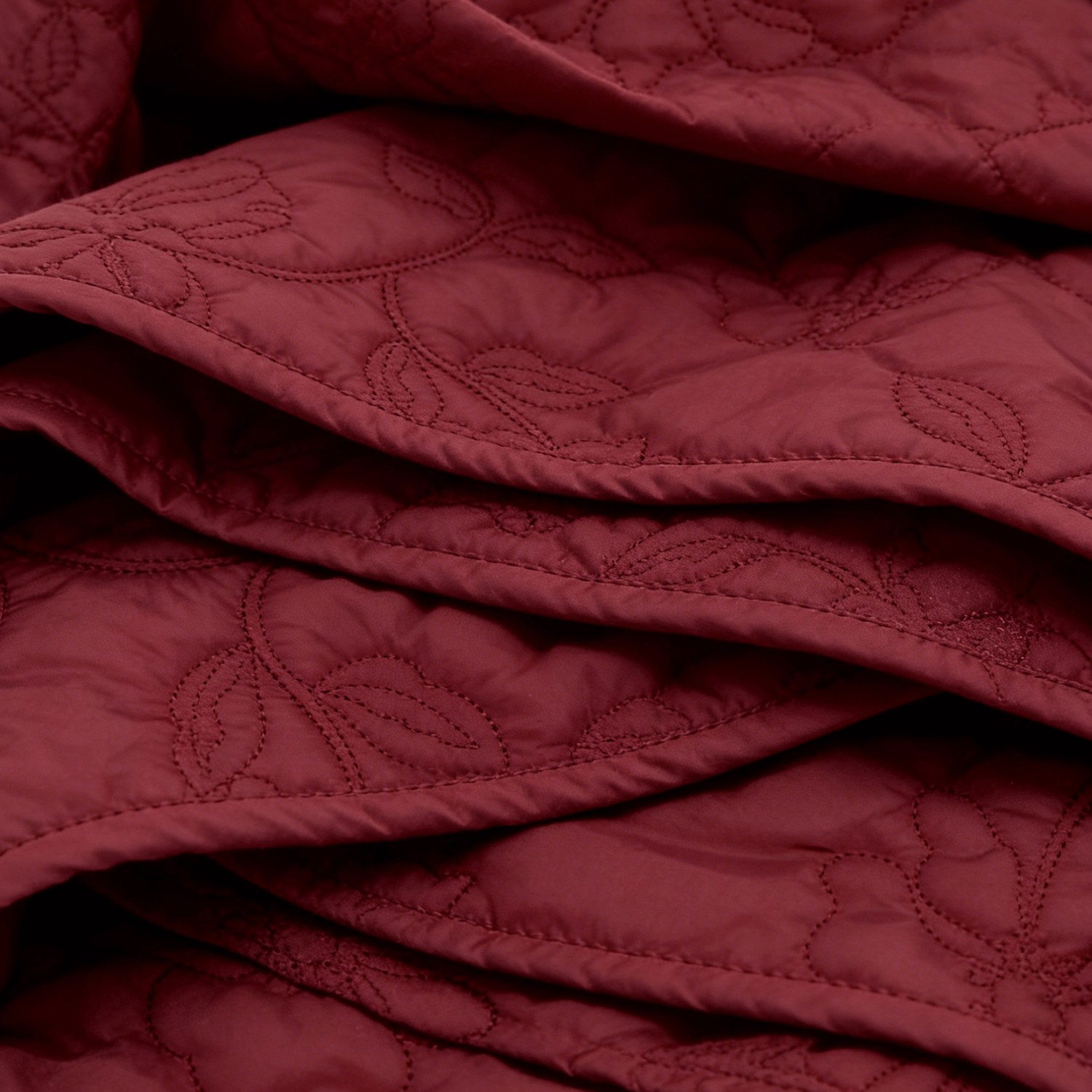
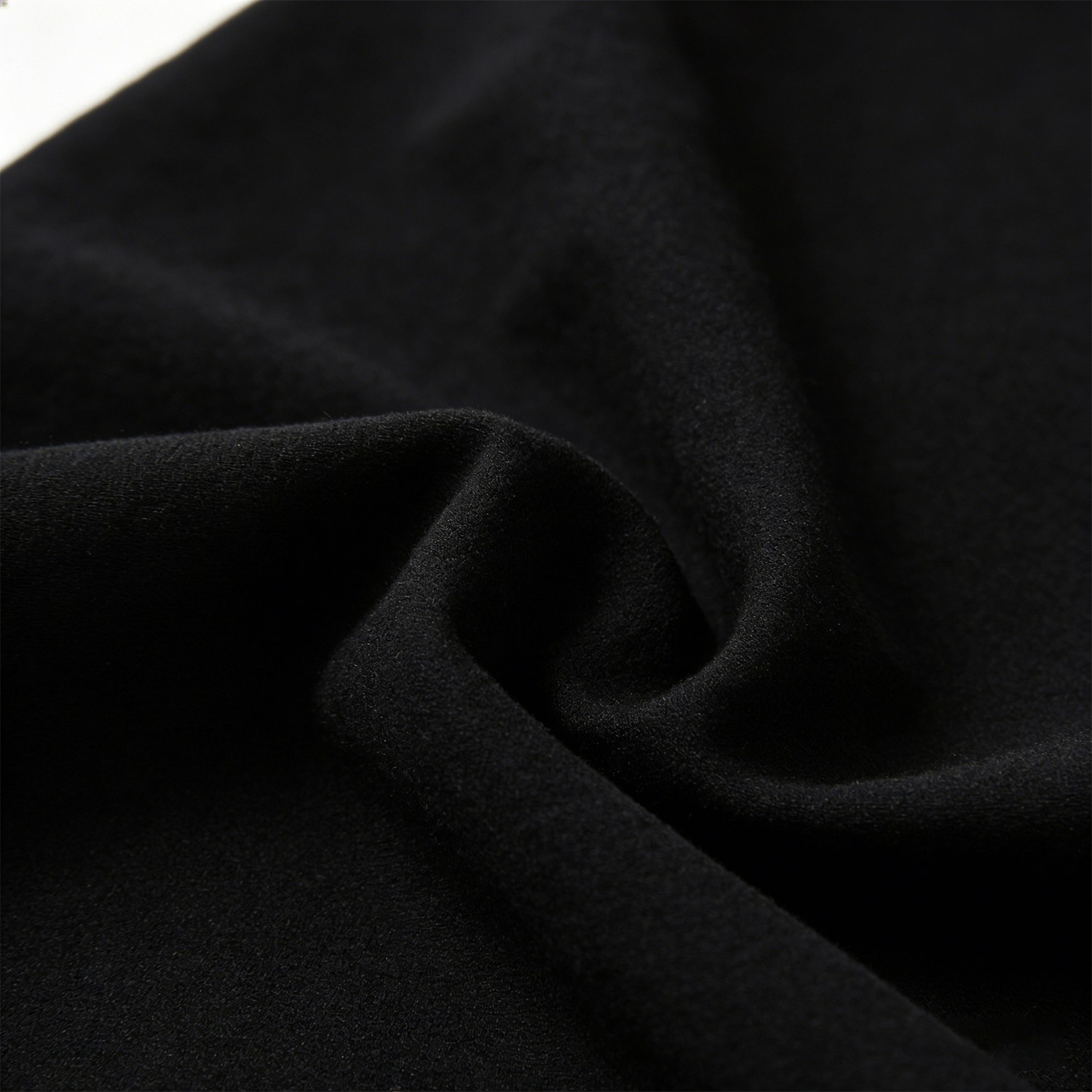
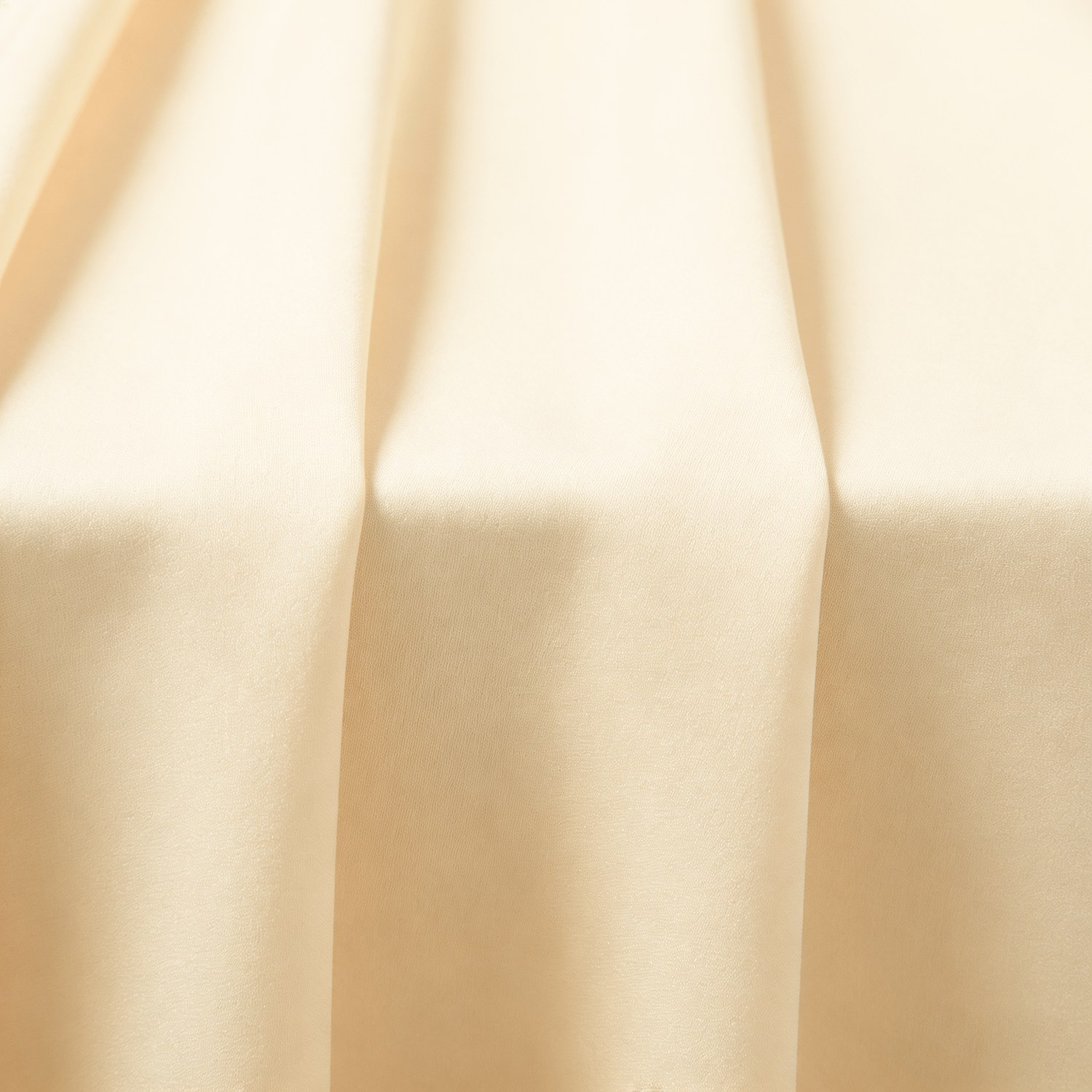
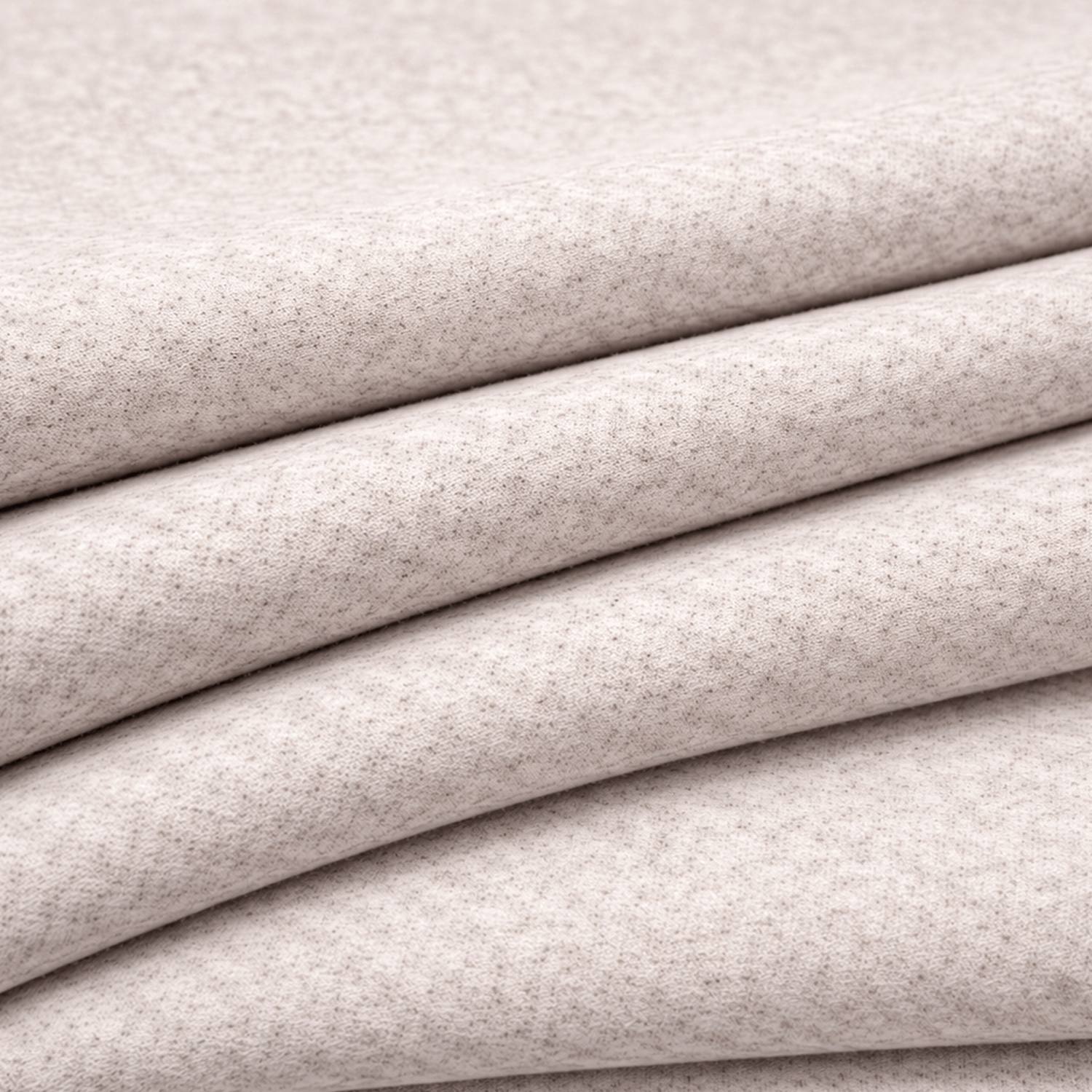
Start by examining the fabric in natural light. Many polyester fabrics have a consistent surface, a regular appearance to the yarn, and a noticeable sheen, particularly if they are made from filament yarns or finished to create a smooth look. However, this is only a preliminary indication: polyester can also be matt, textured, brushed, knitted or woven to resemble natural fibres. Cotton-polyester blends may resemble cotton while benefiting from polyester’s dimensional stability.
Pay attention to the yarns as well as the fabric surface. If there is a loose thread, check that the filaments are relatively uniform and smooth. Polyester filament yarns can be continuous and even, whereas spun polyester yarns contain shorter fibres and resemble cotton yarns. Some fabrics combine both types or use textured filaments, so a uniform appearance does not necessarily mean that the fabric is polyester.
Common visual and tactile clues
- Sheen: A slight or strong shine may be present, particularly in satin-like or filament polyester fabrics.
- Surface uniformity: Many polyester fabrics have regular yarns and consistent color, although natural-looking textures are also common.
- Drape: Polyester can feel fluid, crisp, springy, or structured depending on its construction.
- Hand feel: Smoothness or a slightly slippery surface can suggest polyester, but soft cotton-like and wool-like polyester fabrics are also common.
- Pilling: Some polyester fabrics form pills through abrasion, particularly certain spun yarns and blends; pilling is not a reliable standalone identification test.
The important distinction is between recognizing a possible polyester-like fabric and proving its fiber composition. Appearance is useful for screening, but a fabric’s construction and finishing can mask the characteristics normally associated with its fiber.
Test How Quickly the Fabric Recovers from Wrinkles
One of the more useful everyday clues when distinguishing polyester from cotton or linen is wrinkle recovery. Polyester fibres generally resist wrinkling and spring back into shape relatively easily after being folded or compressed. The University of Georgia’s textile education resource, Understand Your Fibres, identifies wrinkle resistance, strength and good wash-wear performance as typical characteristics of polyester.
To test for this property, fold a small, inconspicuous section of the fabric and press it gently between your fingers for several seconds before releasing it. Observe whether a visible crease remains or gradually relaxes. If the fabric springs back with only a faint crease, polyester is a possible option. If the crease remains pronounced, the fabric may contain cotton, linen, or another less wrinkle-resistant fibre. However, this is only a comparative test: finishing treatments, yarn structure, fabric weight and blends can all affect the result.
Do not deliberately crush delicate fabrics or apply strong pressure to garments that may be damaged. More importantly, do not use wrinkle recovery as proof of fibre content. For example, cotton-polyester blends can recover better than pure cotton, while some polyester fabrics develop creases depending on their construction and finish.
Check Water Absorption and Drying Behavior
Polyester typically absorbs relatively little moisture into the fibre itself. Consequently, water may spread differently across polyester and cotton fabrics, with polyester often drying faster under comparable conditions. Both the University of Georgia’s textile guide and ScienceDirect’s overview of polyester fabric describe low moisture uptake and quick-drying behaviour as characteristic properties of polyester.
To perform a simple preliminary test, place a small drop of water on a clean, inconspicuous area of the fabric. Observe whether the drop remains on the surface briefly, spreads across the yarns, or quickly darkens and wets the material. If available, compare the result with a known cotton fabric under similar conditions. Even if polyester shows slower absorption into the fibre, the drop can still spread quickly due to the weave, knit structure, surface treatment, or capillary movement between yarns.
This test has important limitations. For example, water-repellent coatings can make cotton resistant to wetting, while hydrophilic finishes can improve polyester’s moisture management. Blends also behave differently to pure fibres, and a dense fabric may take longer to wet simply due to its construction. Therefore, water behaviour is best treated as supporting evidence rather than a definitive identification method.
Avoid using water tests on silk, vintage textiles, upholstery, or fabrics with unknown dyes and finishes, unless you are sure that the material can tolerate moisture safely. Water can leave marks, cause dye migration, or alter the appearance of certain finishes.
Compare Polyester with Cotton, Nylon, and Other Common Fabrics
When the label is missing, the most useful question is not simply whether a fabric feels synthetic. It is whether its combined characteristics fit polyester better than other likely fibers. Cotton, nylon, acrylic, viscose, and polyester can all be used in smooth, lightweight, or soft fabrics, so identifying the closest match requires more than one observation.
| Property | Polyester fabric | Cotton fabric | Nylon fabric | Viscose fabric |
| Typical hand feel | Can be smooth, crisp, soft, or slippery | Often soft with a natural, matte feel | Frequently smooth and resilient | Often soft with fluid drape |
| Wrinkle behavior | Generally good wrinkle resistance | Often wrinkles, depending on construction and finish | Usually good recovery | Can wrinkle readily, depending on fabric construction |
| Moisture behavior | Low fiber moisture uptake; often dries quickly | Absorbs moisture readily | Low to moderate moisture absorption compared with cotton; properties vary | Generally absorbs more moisture than polyester |
| Surface appearance | Can be shiny, matte, textured, or cotton-like | Often matte, but can be mercerized or finished to shine | Often smooth, sometimes glossy | Frequently has a soft drape and may have a subtle sheen |
| Common uses | Sportswear, fleece, lining, curtains, bedding | T-shirts, shirts, towels, denim | Activewear, hosiery, outerwear, technical fabrics | Blouses, dresses, linings, soft draping fabrics |
| Identification limitation | Blends and finishes can imitate other fibers | Finishes can improve wrinkle resistance and water repellency | Can resemble polyester closely | Blends and finishes alter feel and appearance |
These are general tendencies, not fixed rules. The same fiber can be engineered into fabrics with very different surface textures and performance characteristics. The table is useful for narrowing possibilities, but it cannot establish an exact fiber percentage or reliably distinguish every polyester blend from a similar synthetic fabric.
Can a Burn Test Identify Polyester Fabric?
A burn test is a traditional technique for identifying textiles because fibres react differently to heat and flames. For example, polyester typically shrinks or melts near a flame, forming a hard, rounded residue as the molten material cools. Cotton generally burns without melting, leaving a softer, ash-like residue. FabricLink’s Burn Test guide describes the observations used to help distinguish manufactured fibres, such as melting behaviour, smoke, odour and residue.
However, a burn test is not recommended as the primary method for identifying an unknown fabric, particularly when its composition is uncertain. Burning synthetic textiles can release irritating or hazardous fumes, and molten polymer can adhere to the skin, causing severe burns. A fabric may also contain flame-retardant chemicals, dyes, coatings, or multiple fibre types that can alter the outcome. Never burn an entire garment and avoid inhaling smoke or deliberately smelling fumes to identify the material.
The Canadian Conservation Institute notes that blends can complicate burn-test interpretation, and that neither burn testing nor microscopy is always conclusive in isolation. They recommend further testing when identification is necessary.
For everyday use, it is safer to rely on touch, wrinkle recovery, and how the fabric behaves when wet. However, if you are working in a textile laboratory or professional testing environment, you should follow the applicable safety procedures and use an established fibre-identification protocol rather than relying on a casual flame test.
How Professionals Confirm Polyester Fiber Content?
When a reliable answer is important, professional testing is a better option than home experiments. AATCC Test Method 20, ‘Fiber Analysis: Qualitative describes approaches for identifying commercial textile fibres through physical, microscopic, and chemical examination. ASTM D276, Standard Test Methods for the Identification of Fibres in Textiles, also covers techniques such as microscopy, solubility relationships, and infrared spectroscopy. ASTM specifically states that infrared analysis and solubility methods are the preferred way of identifying many man-made fibres, while microscopy can provide supporting evidence.
Depending on the sample and the question being asked, a laboratory may use one or more of the following methods:
- Microscopic examination: A technician examines fiber shape and surface features. This can help narrow the possibilities, although the appearance of many manufactured fibers overlaps.
- Solubility testing: A carefully selected chemical procedure examines how a fiber responds to particular solvents. This requires appropriate laboratory controls and should not be attempted with household chemicals.
- Infrared spectroscopy: FTIR or related infrared methods can provide a chemical signature that helps identify polymer types, including polyester.
- Advanced chemical analysis: For more complex questions, such as distinguishing polyester polymers or investigating additives, laboratories may use techniques such as pyrolysis–gas chromatography/mass spectrometry.
A 2025 study by researchers at the U.S. National Institute of Standards and Technology, Pyrolysis-GC/MS Differentiates Polyesters and Detects Additives for Improved Monitoring of Textile Labeling Accuracy and Plastic Pollution, illustrates how advanced chemical analysis can distinguish different polyester materials and investigate additives. This level of analysis is especially relevant when a simple “synthetic or natural” answer is not sufficient.
If you are identifying fabric for resale, manufacturing, product specifications, compliance, or a customer dispute, ask a qualified textile-testing laboratory which method is appropriate. If the material is a blend, request composition analysis rather than merely a confirmation that polyester is present.
Frequently Asked Questions About Polyester Fabric
- How can I tell if fabric is 100% polyester without a tag?
Look for a combination of wrinkle resistance, relatively low moisture absorption, and a texture consistent with polyester, but treat these as clues rather than proof. A laboratory fiber-composition test is needed to confirm whether the fabric is 100% polyester or a blend.
- Does polyester feel like cotton?
Polyester can be engineered to feel soft and cotton-like, particularly when it uses spun yarns or a brushed finish. Touch alone cannot reliably distinguish pure polyester from cotton or a cotton-polyester blend.
- Does polyester absorb water?
Polyester generally has low moisture absorption within the fiber and often dries quickly, although water can still spread across the fabric surface. Weave structure, coatings, and moisture-management finishes can change how the material behaves.
- Can a burn test prove that fabric is polyester?
No, a burn test can provide clues but cannot conclusively identify every fiber or blend. It also creates fire and fume hazards, so professional testing is preferable when the answer matters.
- How can I distinguish polyester from nylon?
Both fibers can be smooth, durable, and relatively quick-drying, so visual inspection and touch may not separate them reliably. Microscopic examination combined with chemical or instrumental testing can provide stronger evidence.
- What is the most accurate way to identify polyester fabric?
A qualified textile laboratory can use methods such as infrared spectroscopy, solubility testing, and microscopy to identify the fiber. For a blended fabric, request a composition analysis if you need to know the proportion of polyester and other fibers.
Conclusion
While it is possible to identify polyester fabric without tags at a preliminary level, it is important to distinguish an educated guess from a confirmed result. The surface appearance, texture, how it recovers from wrinkles, and how it behaves when wet can help you narrow down the possibilities, especially when several of these characteristics point in the same direction. However, none of these characteristics are unique to polyester, and blends or finishing treatments can cause a fabric to behave differently from what its main fibre would suggest.
For everyday decisions, these observations may be sufficient to inform further inspection, but they should not be used to confidently claim the exact fibre content. For product sourcing, textile manufacturing, resale, or quality control work, laboratory methods based on recognised standards provide a more reliable answer. The most effective approach is to use simple observations for screening and professional analysis for confirmation.