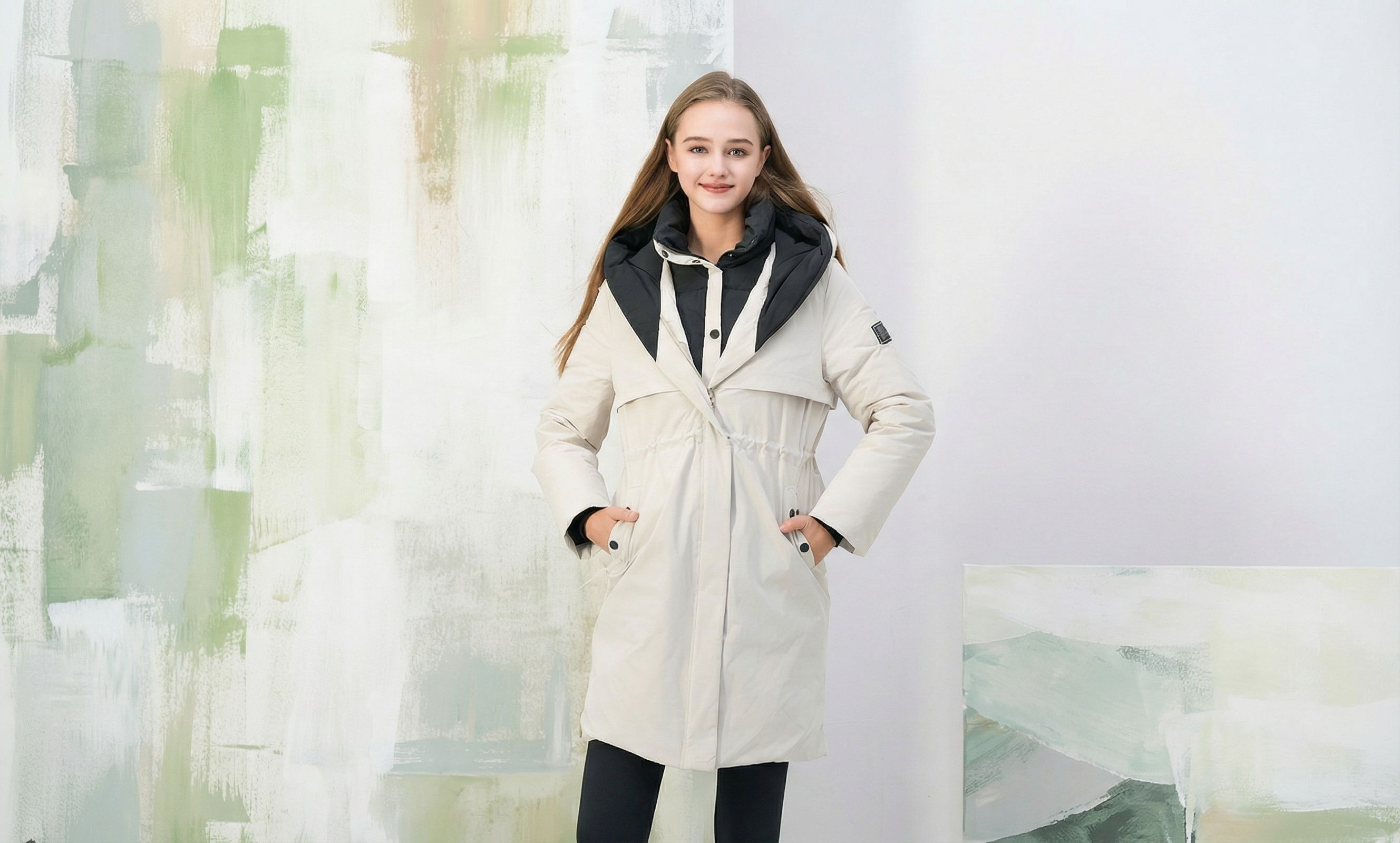
Selecting a puffer coat may appear simple at first sight. Many individuals believe that thick means warm, or that a single coat can serve well in all winter climates. In reality, the efficacy of a puffer coat is derived from a combination of attributes that are more than just aesthetics. Climate, activity level, insulation type, construction details, and fit all have an effect on the perceived warmth, comfort, and practicality of a jacket in the real world.
Understanding the interactions between these components is essential to making an informed decision. Instead of attempting to focus on popular brand names or fashion-related trends, selecting the appropriate puffer jacket necessitates an honest evaluation of when, where, and how it will be utilized. A winter coat that is exceptional in its ability to dry in sub-zero temperatures may cause discomfort and appear excessive in a damp urban climate. Similarly, a lightweight design intended for motion may not provide sufficient warmth for long periods of inaction.
The Purpose of a Puffer Jacket
At the core, a puffer coat is intended to store body heat and release it when the temperature is excessively hot. This is accomplished through an insulation structure that contains compartments that are often referred to as baffles; these compartments either hold down or synthetic filling. These compartments harbor still air that functions as a barrier to heat transfer.
The effectiveness of a puffer jacket is not solely derived from the presence of insulation, but also from the distribution of this insulation and its protection. Warmth is derived from the loft, which is the amount of insulation that is expanded and the amount of air that can be held. A coat that has a higher loft typically has better insulation, but only if the fabric is able to maintain its shape and if the outer fabric is not excessively hot.
Another critical element is that puffer jackets are primarily composed of static insulation. They have the greatest effectiveness when the wearer is slow or stationary, such as during commuting, standing outdoors, or lying down during recreational activities. When the activity levels increase, the excess heat and moisture will become a problem, making breathability and temperature regulation both important considerations.
Understanding these fundamental principles helps to clarify why no single puffer coat can be effective in all climates and situations.
Climate Conditions and Temperature Ranges
Climate is the most significant factor in the selection of a puffer coat. Temperature alone cannot describe the degree to which an environment is cold. Humidity, wind exposure, and precipitation have a significant impact on thermal comfort; these effects often lead to a perception of temperature that is lower than expected.
In dry, cold climates, such as the continental interior or high elevation regions, the efficiency of insulation is the primary concern. Low humidity facilitates insulation’s preservation of loft and greatest efficiency. In these habitats, thick coats that have a higher insulation capacity can provide a lot of warmth without causing discomfort.
Conversely, cold and damp climates have different difficulties. Moisture in the air is more effective at conducting heat, which increases the perceived temperature of cold. Other conditions that are damp also negatively impact the insulation type, decreasing its capacity to trap air. In these instances, the performance of the outer fabric, its moisture resistance, and the stability of its insulation become as important as warmth.
Urban winters have an increased number of variables to deal with. Short periods of cold weather are followed by exposures to the outdoors, public transportation, and different levels of activity. A warm jacket that is too heavy may quickly become uncomfortable inside, while a lightweight option may lack the necessary duration when exposed outdoors.
Wind is another influence that should not be disregarded. Even moderate wind can cause the body’s temperature to be disrupted by disturbing the warm air layer around the body. A proper design of the puffer jacket minimizes the effect by utilizing outer fabrics that are densely woven and have a considerate design that decreases the amount of air that is lost.

Insulation Types and Their Role in Different Climates
The distinction between down and synthetic insulation is one of the most controversial aspects of the puffer’s selection, and it’s certainly justified. Each type of insulation has a different response to different environmental conditions.
Down insulation is considered superior for its exceptional ratio of warmth to weight. It’s easy to compress, and it recovers easily; it also has a high thermal efficiency in cold, dry conditions. Down-filledackets are typically heavier and less portable than their synthetic counterparts. This makes them popular for travel and long wear. However, precipitation is susceptible to moisture. When exposed to humidity or wet conditions, it can cluster together and have a significant loss of its insulating properties.
Insulation that is synthetic is intended to replicate the down’s properties while addressing its lack of weakness. It is more effective at retaining heat when wet, and it will dry out faster, thus becoming more popular in flooded or erratic climates. While synthetic insulation is typically heavier and bulkier, modern materials have reduced the gap between these two types of insulation significantly.
The role of insulation becomes clearer when matched to climate conditions:
-
In cold and dry environments, down insulation offers maximum warmth with minimal weight.
-
In cold and damp climates, synthetic insulation provides more consistent performance and peace of mind.
-
In variable conditions, hybrid designs or treated down may offer a balance between efficiency and reliability.
-
In milder winters, lower insulation levels reduce overheating and improve comfort during daily wear.
Understanding how insulation interacts with environmental factors helps avoid choosing a jacket that performs well on paper but poorly in actual use.
Jacket Construction and Warmth Control
Beyond the insulation type, the construction of the puffer’s jacket has a significant impact on how the jacket manages heat. The method in which insulation is confined, the shape of the flaps, and the quality of their stitching all have an effect on the degree of warmth retention and the long life of the insulation.
The design of the baffle is responsible for the distribution of insulation across the jacket. Narrow flaps have a more uniform appearance and decrease the insulation shift, while larger flaps allow for a greater loft but may have a more frequent cold spot if not properly filled. The distinction between stitched-through and box-baffle design also has an effect on performance. Stitched-through designs are heavier and have more malleability, but they allow some heat to be lost at the joints. Box-baffle design minimizes this issue by creating isolated walls between containers, though it increases weight and bulk.
The outer fabric choice has an effect on both temperature and practicality. A dense shell that is tightly woven decreases the effectiveness of wind in penetrating it and prevents the insulation from being affected by moisture. Some fabrics are coated with water-repellent treatments that help to repel rain and snow while still allowing for breathability. While a puffer coat isn’t intended to replace a waterproof shell, these procedures augment the comfort of the wearer in adverse conditions.
The collar’s height, the design of the hood, and the way it is constructed affect the amount of heat retained. Areas that typically experience heat escapees, such as the neck, wrists, and hem, need to be paid attention to carefully. A proper design of the jacket will seal in the warmth without feeling constricted, and it will also allow for natural movement while still maintaining efficiency.
Choosing a Puffer Jacket by Activity Type
Activity level affects the amount of insulation necessary and the way in which a jacket handles excess heat. A coat that is appropriate for low-level use may feel oppressive during movement, while a lightweight option that is intended for activity may feel insufficient during rest periods.
For daily travel and regular wear, having balance is essential. The coat should have sufficient insulation value while outside, but not inside. Moderate insulation levels, streamline design, and breathable fabric contribute to versatility. Also important is the weight and bulk of the jacket, which may be carried or worn for a long period of time during the day.
Traveling outdoors changes the normal priorities. Walking, sightseeing, and light hiking all have the potential to cause body heat; however, they also expose the wearer to the wind and changing weather. Jackets that are intended for this type of activity have a lighter insulation layer combined with a protective wind layer. Comfort and mobility are more important than achieving the greatest possible temperature.
In more stationary pursuits, such as camping, observing, or simply waiting outdoors, insulation is the primary concern. The coat must maintain temperature during extended periods of minimal motion. In these instances, increased loft and longer duration significantly enhance the comfort of the jacket, even if the jacket feels overpowered during initial movement.
The relationship between activity and insulation can be summarized as follows:
-
Low activity favors higher insulation and longer jacket length.
-
Moderate activity benefits from balanced insulation and flexible construction.
-
High activity requires lighter insulation and better heat regulation.
Matching the jacket to the dominant activity prevents discomfort and ensures the garment performs as intended.
Fit, Length, and Mobility Considerations
Fit has an effect on both temperature and functionality. A tight jacket diminishes the insulation’s ability to trap air; the reduction in temperature is greatest at the surface. A blouse that is too loose will facilitate the escape of warm air and the circulation of cold air inside. The perfect fit creates a consistent layer of insulation that doesn’t impede movement.
Other important factors include length and width. Shorterackets are more flexible and are often preferred for activewear or urban wear. Longerackets have a greater capacity to provide warmth and coverage, which is particularly true of them in cold and windy environments. The distinction between short and long styles should primarily reflect the way and location of the coat’s wear. Aesthetic preferences should be secondary to this.
Other mobility-boosting features include articulated sleeves, stretchy fabrics, and adjustable hems that contribute to comfort while moving. These details may seem inconsequential, but they have a significant impact on the way a jacket feels during long-term wear. A properly designed puffer coat should have a natural feel; it should not be overly bulky or constrictive.
Weight, Packability, and Practical Use
The weight and compactness of the jacket are the most important factors in its design. Travelers and enthusiasts who enjoy the outdoors often require a jacket that can be compacted and stored without taking up too much space. Lightweight puffer jackets are successful in this regard; they provide effective warmth in a compact form.
However, reducing the weight can also lead to a decrease in durability or warmth. Ultralightackets are beneficial for layering and occasional use, but they may not be durable under heavy usage or adverse conditions. Understanding the trade-off will facilitate a realistic perspective.
For everyday use, the importance of the pack may be less significant than the durability and comfort. A heavier coat that is made of durable material may have a longer lifespan; this is especially true when it’s frequently used.
Long-Term Use and Versatility
A puffer coat is often considered a long-term commitment, which is worn every season. Variability increases in importance over time; the pattern of precipitation, the routine, and personal preferences all have an effect on this. Jackets that can change temperatures through layering or other features that are adjustable tend to have a longer lifespan.
Flexible designs avoid both extremes. They aren’t the most temperature-supporting or light-supporting, but they do well in a variety of environments. This attracts them to users who prefer having fewer clothing items that can cope with multiple situations.
Also, the capacity to maintain long-term satisfaction is dependent on the capacity to maintain long-term satisfaction. The exterior is constructed with superior quality, the interior is made of resilient fabric, and the insulation is stable over time. This results in a long-term commitment to the jacket.
Making an Informed Choice
Choosing the right puffer jacket ultimately comes down to aligning design features with real-world needs. Climate, activity level, and personal comfort preferences should guide the decision more than trends or assumptions.
Understanding how insulation works, how construction affects warmth, and how fit influences comfort allows for a more rational selection process. Rather than asking whether a jacket is “warm enough,” it is more useful to ask whether it is appropriate for the conditions and activities it will face most often.
A well-chosen puffer jacket feels comfortable, reliable, and unobtrusive. It supports the wearer without drawing attention to itself, allowing focus to remain on the experience rather than the clothing.
Puffer jackets are characterized by a combination of multiple attributes. Climate, insulation type, design, construction, and intended use all have an effect on performance. Recognizing these associations helps to avoid common errors, such as choosing too much warmth for temperate conditions or not providing sufficient protection for harsh environments.
By understanding the process of selection about the location and manner in which it is worn, it is more apparent how to find a model that provides genuine comfort and practicality. The appropriate puffer coat is not necessarily the most impressive in the show, but it is the one that consistently delivers in the most serious situations.
In this regard, selecting a puffer jacket is less concerned with following the trends and more with comprehending requirements. With the correct perspective, a puffer jacket is no longer just a seasonal costume, but instead is a dependable companion that is both climate and activity-appropriate.