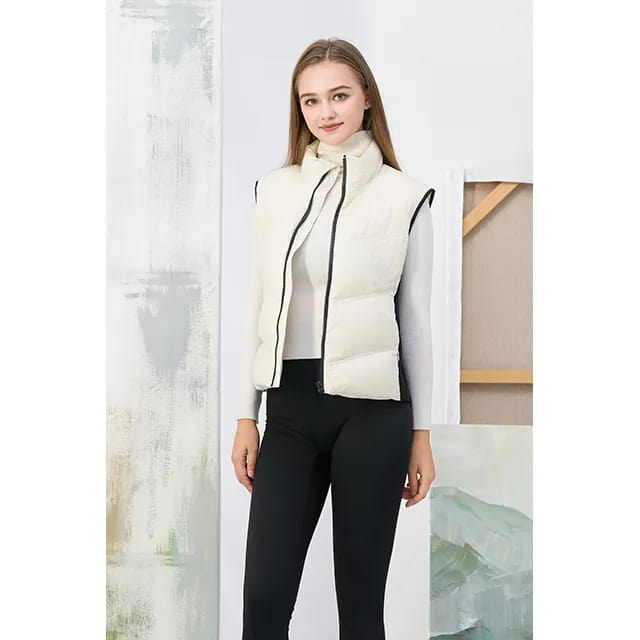
The best lightweight down vest for women in 2026 offers premium insulation and a lightweight design, as well as excellent packability and versatile styling. According to research from the International Down and Feather Bureau (IDFB) and thermal insulation studies published in the Textile Research Journal, high-performance down is one of the most efficient insulating materials available. It offers exceptional warmth-to-weight performance while maintaining breathability and compressibility. Consequently, a high-quality lightweight down vest is considered one of the most versatile garments for layering during travel, outdoor recreation, commuting, and everyday wear.
Introduction: Why Lightweight Down Vests Remain a Wardrobe Essential in 2026
Fashion trends may change every season, but functional clothing categories that successfully combine comfort, performance, and versatility remain relevant year after year. The Lightweight Down Vest is a prime example of this. Originally designed for outdoor enthusiasts seeking warmth without restricting arm movement, down vests have evolved into a wardrobe staple that bridges the gap between technical outerwear and everyday fashion.
Women’s lightweight down vests have become increasingly popular because they solve the problem of how to stay warm in changing weather conditions without the bulk and risk of overheating associated with heavy winter jackets. Whether walking through a city on a crisp autumn morning, travelling between climates, wearing it under a shell jacket during outdoor activities, or simply adding an extra layer of insulation in an air-conditioned office, a lightweight down vest provides a level of practicality that few other garments can match.
The growing popularity of layering systems has further increased demand. Rather than relying on a single heavy coat, modern consumers increasingly prefer adaptable clothing combinations. A lightweight down vest serves as a critical midlayer, providing thermal efficiency while maintaining flexibility and style.
As manufacturers continue to improve insulation technologies, sustainable sourcing practices, and garment construction techniques, lightweight down vests have become more sophisticated than ever before. Understanding the features that distinguish a high-quality vest from an average one is essential for making an informed purchase in 2026.
What Is a Lightweight Down Vest?
A lightweight down vest is a sleeveless, insulated garment filled primarily with natural down clusters obtained from ducks or geese. Unlike traditional insulated jackets, vests focus insulation around the core of the body while leaving the arms free for unrestricted movement.
This design offers several advantages:
- Improved mobility;
- Reduced garment weight;
- Better temperature regulation;
- Enhanced layering versatility;
- Greater packability.
The defining characteristic of a lightweight down vest is its ability to provide substantial warmth relative to its weight. Modern premium models often weigh less than 300 grams while delivering impressive thermal performance.
The effectiveness of down insulation stems from its unique three-dimensional structure. Individual down clusters create thousands of tiny air pockets that trap body heat while allowing moisture vapour to escape. This combination of insulation and breathability makes down one of the most efficient natural insulating materials available.

Why Lightweight Down Vests Are More Popular Than Ever?
The continued growth of the lightweight down vest market is being driven by several consumer trends.
-
Demand for versatile clothing
Modern consumers increasingly seek garments that can be worn in a variety of settings. A lightweight down vest can be worn seamlessly in both outdoor recreational settings and urban environments, reducing the need for multiple specialised items of clothing.
Unlike bulky winter coats, a vest can be worn:
- During travel
- At work
- While hiking
- For casual outings
- During outdoor sports
This versatility significantly increases its value.
-
Growth of outdoor lifestyle culture
The outdoor recreation industry continues to expand globally. Activities such as hiking, camping, trail walking, and adventure travel have become mainstream pursuits.
Many consumers want technical apparel that functions well outdoors but also looks appropriate in everyday settings. Lightweight down vests perfectly satisfy this demand.
-
Increased focus on layering systems
Outdoor apparel experts have long promoted layering as the most effective strategy for temperature regulation.
A typical layering system includes:
- Base layer
- Mid layer
- Insulating layer
- Outer shell
A lightweight down vest is an excellent insulating layer because it provides warmth without restricting movement.
Understanding Down Insulation
In order to evaluate the best lightweight down vest for women in 2026, it is important to understand how down insulation works.
-
What is down?
Down is the soft plumage found beneath the outer feathers of waterfowl.
Unlike feathers, it lacks rigid quills and forms three-dimensional clusters that can trap significant amounts of air.
This trapped air provides thermal insulation while keeping the overall weight low.
-
Down vs. Feather
Many consumers mistakenly assume that down and feathers are identical.
They are not.
| Characteristic | Down | Feather |
| Structure | Soft clusters | Flat structure with quill |
| Insulation Efficiency | Excellent | Moderate |
| Weight | Extremely Light | Heavier |
| Compressibility | Superior | Lower |
| Warmth-to-Weight Ratio | Outstanding | Average |
Premium lightweight down vests contain a high percentage of down relative to feathers.
What Does Fill Power Mean?
One of the most important specifications when evaluating a lightweight down vest is fill power.
Fill power measures the lofting ability of down.
Higher fill power indicates:
- Greater insulation efficiency
- Better compressibility
- Lower weight
- Improved warmth retention
Fill Power Comparison
| Fill Power | Quality Level | Typical Application |
| 550–600 | EntryLevel | Casual wear |
| 650–700 | Good | Everyday outdoor use |
| 750–800 | Premium | Technical outdoor apparel |
| 850–900+ | Elite | Highperformance gear |
For most women seeking the best lightweight down vest in 2026, a fill power between 700 and 850 provides the ideal balance between warmth, weight, and value.
Key Features to Look for in the Best Lightweight Down Vest Women’s 2026
Not all down vests are the same.
Understanding the critical performance features is key to making an informed decision as a buyer.
-
Lightweight construction
Weight remains one of the most important considerations.
Modern premium lightweight down vests typically weigh between 180 and 350 grams.
Lower weight improves:
- Comfort
- Travel convenience
- Layering flexibility
However, excessively lightweight designs may sacrifice durability.
The ideal vest strikes a balance between low weight and sufficient fabric strength.
-
High-quality shell fabric
The outer shell protects the insulation and contributes to the vest’s durability and weather resistance.
Common shell materials include:
- Recycled nylon
- Ripstop nylon
- Polyester blends
- Ultralight technical fabrics
Ripstop fabrics are particularly valuable because they resist tearing and abrasion.
-
Packability
One of the greatest advantages of a lightweight down vest is its packability.
Many premium models can be compressed into:
- Integrated pockets
- Stuff sacks
- Small travel pouches
This feature makes them ideal for:
- Air travel
- Backpacking
- Daily commuting
-
Water resistance
Traditional down loses its insulating properties when wet.
Modern lightweight down vests often feature:
- Durable water repellent (DWR) treatments
- Hydrophobic down technologies
- Water-resistant shell fabrics
These improvements enhance performance in damp conditions.
Best Lightweight Down Vest Styles for Women in 2026
There are women’s down vests available in multiple design categories.
Each one caters to different needs and lifestyles.
-
Outdoor performance vests
Designed for:
- Hiking
- Trekking
- Backpacking
- Climbing
Key characteristics include:
- Technical fabrics
- Lightweight construction
- High fill power insulation
- Enhanced weather resistance
These vests prioritise performance over fashion.
-
Travel Vests
Travelfocused designs emphasise:
- Packability
- Wrinkle resistance
- Lightweight construction
- Multiclimate versatility
Frequent travellers consider a lightweight down vest to be an essential packing item.
-
Lifestyle and casual vests
These models blend functionality with fashion.
Common features include:
- Tailored silhouettes
- Stylish quilting patterns
- Premium finishes
- Urban-friendly aesthetics
They perform well in everyday settings while keeping you warm.
-
Hybrid Insulated Vests
Hybrid construction is a growing trend in 2026.
These designs combine:
- Down insulation
- Synthetic insulation
- Stretch panels
Benefits include:
- Improved mobility
- Better moisture management
- Enhanced temperature regulation
Hybrid vests are becoming increasingly popular among active women.

Why Women Prefer Lightweight Down Vests Over Heavy Jackets?
While heavy winter jackets certainly have their place in extreme conditions, lightweight down vests offer several practical advantages.
-
Better freedom of movement
The sleeveless design allows for:
- Easier arm movement
- Improved athletic performance
- Reduced fatigue
This is particularly beneficial during activities such as hiking, traveling, and outdoor recreation.
-
Improved temperature regulation
Many women experience overheating when wearing bulky, insulated jackets.
A vest helps to maintain core warmth while allowing excess heat to dissipate through the arms.
This creates a more comfortable microclimate.
-
Four-season versatility
Unlike heavy winter coats, which spend much of the year in storage, lightweight down vests can be worn across multiple seasons.
Typical usage includes:
- Spring layering
- Cool summer evenings
- Autumn weather
- Winter midlayering
This versatility significantly increases the value of the garment.
How to Choose the Right Lightweight Down Vest Based on Climate?
Selecting the ideal vest depends heavily on environmental conditions.
| Climate Type | Recommended Fill Power | Ideal Weight |
| Mild Climate | 600–700 Fill | 180–250g |
| Cool Climate | 700–800 Fill | 250–320g |
| Cold Climate | 800+ Fill | 300–400g |
| Travel Use | 700–850 Fill | 200–300g |
Choosing a vest appropriate for your climate prevents both underinsulation and overheating.
Sustainable Down and Eco-Friendly Innovations in 2026
In the outdoor apparel industry, sustainability has become one of the most influential factors affecting purchasing decisions. Consumers are no longer evaluating a lightweight down vest based solely on warmth and appearance. They increasingly want to know where the materials come from, how the product was manufactured, and if the brand follows ethical sourcing practices.
Consequently, significant advancements have been made in sustainable down technologies and environmentally responsible garment production in 2026.
-
Responsible Down Standard (RDS)
One of the industry’s most recognised certifications is the Responsible Down Standard (RDS).
This certification verifies that:
- Birds are treated humanely.
- Down and feathers are traceable throughout the supply chain.
- Forcefeeding practices are prohibited;
- Animal welfare standards are maintained.
Many manufacturers of premium, lightweight down vests now use RDScertified down as a baseline requirement rather than a premium upgrade.
-
Recycled shell fabrics
Environmental innovation is no longer limited to insulation.
Leading brands increasingly incorporate the following:
- Recycled nylon
- Recycled polyester
- Oceanbound plastic fibres
- Postconsumer recycled materials
These fabrics reduce reliance on virgin, petroleum-based resources while maintaining durability and performance.
-
PFAS-free water repellency
Traditional water-repellent treatments often relied on per- and polyfluoroalkyl substances (PFAS), which have raised environmental concerns.
New-generation lightweight down vests increasingly feature:
- PFAS-free DWR coatings
- Biobased water repellents
- Alternative eco-friendly finishing technologies
Consumers concerned about sustainability should pay attention to these details when comparing products.
2026 Market Trends Shaping the Lightweight Down Vest Industry
The outdoor apparel industry is continuing to evolve rapidly.
Several trends are expected to influence purchasing decisions throughout 2026 and beyond.
Hybrid insulation growth
Hybrid insulation combines:
- Natural down
- Synthetic insulation
- Stretch performance fabrics
Benefits include:
- Better moisture management
- Increased flexibility
- Improved durability
Hybrid designs are becoming increasingly popular among active women.
Increased demand for travel apparel
Global travel recovery continues to drive interest in versatile apparel.
Travellers are increasingly prioritising garments that are:
- Lightweight
- Packable
- Multifunctional
- Climate adaptable
The lightweight down vest aligns perfectly with these requirements.
Elevated focus on sustainability
Consumers are paying closer attention to:
- Supply chain transparency
- Ethical sourcing
- Recycled materials
- Carbon reduction initiatives
Brands that address these concerns are gaining market share.
Fashion meets function
The distinction between technical apparel and lifestyle clothing continues to blur.
Modern lightweight down vests increasingly incorporate:
- Tailored silhouettes
- Luxury fabrics
- Fashion-forward aesthetics
- Technical performance features
This convergence expands their appeal beyond traditional outdoor enthusiasts.
Frequently Asked Questions (FAQ)
- What is the best fill power for a lightweight down vest?
For most women, a fill power between 700 and 850 offers the best balance of warmth, weight, compressibility, and value.
- Are lightweight down vests warm enough for winter?
Yes, especially when used as part of a layering system. In extremely cold environments, they are commonly worn beneath a shell or insulated jacket.
- Is down better than synthetic insulation?
Down generally provides a superior warmth-to-weight ratio and compressibility. Synthetic insulation performs better in consistently wet conditions.
- Can a lightweight down vest get wet?
Modern vests often include water-resistant treatments, but prolonged exposure to heavy rain should still be avoided unless the vest is specifically designed for wet-weather performance.
- How long does a quality lightweight down vest last?
With proper care, a premium lightweight down vest can maintain performance for 5–10 years or longer.
- Are lightweight down vests still fashionable in 2026?
Absolutely. Lightweight down vests remain one of the most versatile garments in contemporary fashion, blending outdoor functionality with everyday style.
Conclusion
The Lightweight Down Vest has evolved far beyond its origins as a specialist outdoor garment. Today, it is one of the most versatile, practical, and efficient pieces of women’s clothing available. Its unique ability to provide exceptional warmth while remaining lightweight, packable, and stylish makes it equally suited to travel, outdoor activities, commuting, and everyday wear.
The best lightweight down vest for women combines several essential features: high-fill power insulation, thoughtful construction, sustainable materials, weather-resistant properties, and a fit that allows for layering without compromising on comfort. As consumers continue to prioritise versatility, sustainability, and performance, down vests are uniquely positioned to satisfy all three demands.
Whether you are looking to build a travel wardrobe, improve your outdoor layering system, or simply find a reliable piece of clothing for transitional weather, investing in a high-quality lightweight down vest is one of the smartest decisions you can make in terms of apparel in 2026. Its unbeatable warmth-to-weight ratio, year-round usability, and timeless style ensure it will remain a wardrobe staple for years to come.