Abstract
Outdoor jackets are technical garments designed to protect the human body from environmental stressors such as rain, wind, cold, and humidity, while ensuring comfort during physical activity.
According to research in textile engineering and functional apparel from organisations such as the International Organisation for Standardization, as well as performance fabric research summarised by the American Association of Textile Chemists and Colorists, modern outdoor jackets rely on layered fabric systems that balance waterproofing, breathability, wind resistance, and thermal regulation.
Studies on waterproof, breathable textiles demonstrate that advanced membrane technologies, such as ePTFE and polyurethane laminates, enable water vapour to escape while blocking liquid water. This allows for protection and comfort during high-intensity outdoor activities.
Introduction: Why Outdoor Jacket Features Matter?
When choosing an outdoor jacket, style and brand preference are not the only considerations—it is also a technical decision that directly affects comfort, safety, and performance in unpredictable environments. Whether it is used for hiking, mountaineering, commuting, or tactical work, an outdoor jacket must function as a protective microenvironment.
A poorly designed jacket may cause the following problems:
- Overheating due to poor breathability
- Wetting out in rainy conditions
- Wind penetration leading to heat loss
- Restricted movement during physical activity
Modern outdoor jackets solve these problems through engineered fabric systems and structural features that regulate moisture, heat, and airflow.
Waterproof Performance: The First Critical Feature
One of the most important features of an outdoor jacket is its waterproofing, which ensures the wearer stays dry in rainy or snowy conditions.
- How waterproofing works
Waterproof jackets typically use one of the following:
- Microporous membranes (ePTFE or PU)
- Hydrophilic coatings
- Durable water repellent (DWR) surface finishes
These systems block liquid water while allowing vapour to pass through under controlled conditions.
- Waterproof Rating (Hydrostatic Head)
| Rating (mm) | Protection Level | Use Case |
| 5,000 mm | Light rain | Urban commuting |
| 10,000 mm | Moderate rain | Hiking |
| 20,000 mm+ | Heavy storm | Mountaineering |
Higher values indicate stronger resistance to water pressure.
Breathability: The Most Misunderstood Feature
Breathability determines how effectively sweat vapor escapes from inside the jacket.
Scientific Principle
Breathability is not air flow—it is moisture vapor transmission, where sweat evaporates and passes through membrane pores.
Key Metrics
MVTR (Moisture Vapor Transmission Rate)
RET (Resistance to Evaporative Transfer)
| Breathability Level | MVTR (g/m²/24h) | Activity Level |
| Low | <5,000 | Walking |
| Medium | 10,000–15,000 | Hiking |
| High | 20,000+ | Climbing/running |
Windproof Construction
A high-quality outdoor jacket is made from tightly woven fabrics or laminated membranes to block wind penetration. This windproof construction helps to maintain your core body temperature in exposed environments, such as when hiking, mountaineering, or cycling.
Common technologies include:
- TPU or PU membrane layers
- Dense nylon or polyester shell fabrics
- Sealed or taped seams for added protection
Fabric Technology and Layer System
Modern outdoor jackets are built using multilayer constructions.
Common Jacket Structures
| Layer Type | Function |
| Outer layer | Water repellency + abrasion resistance |
| Membrane layer | Waterproof + breathable barrier |
| Inner lining | Comfort + moisture management |
Research shows laminated waterproof breathable fabrics are now the industry standard for performance jackets.
Durability and Abrasion Resistance
Outdoor jackets must be able to withstand:
- Backpack friction
- Rock contact
- Frequent folding and compression
Key durability indicators:
- Fabric denier (thickness)
- Ripstop reinforcement
- Reinforced shoulders and elbows
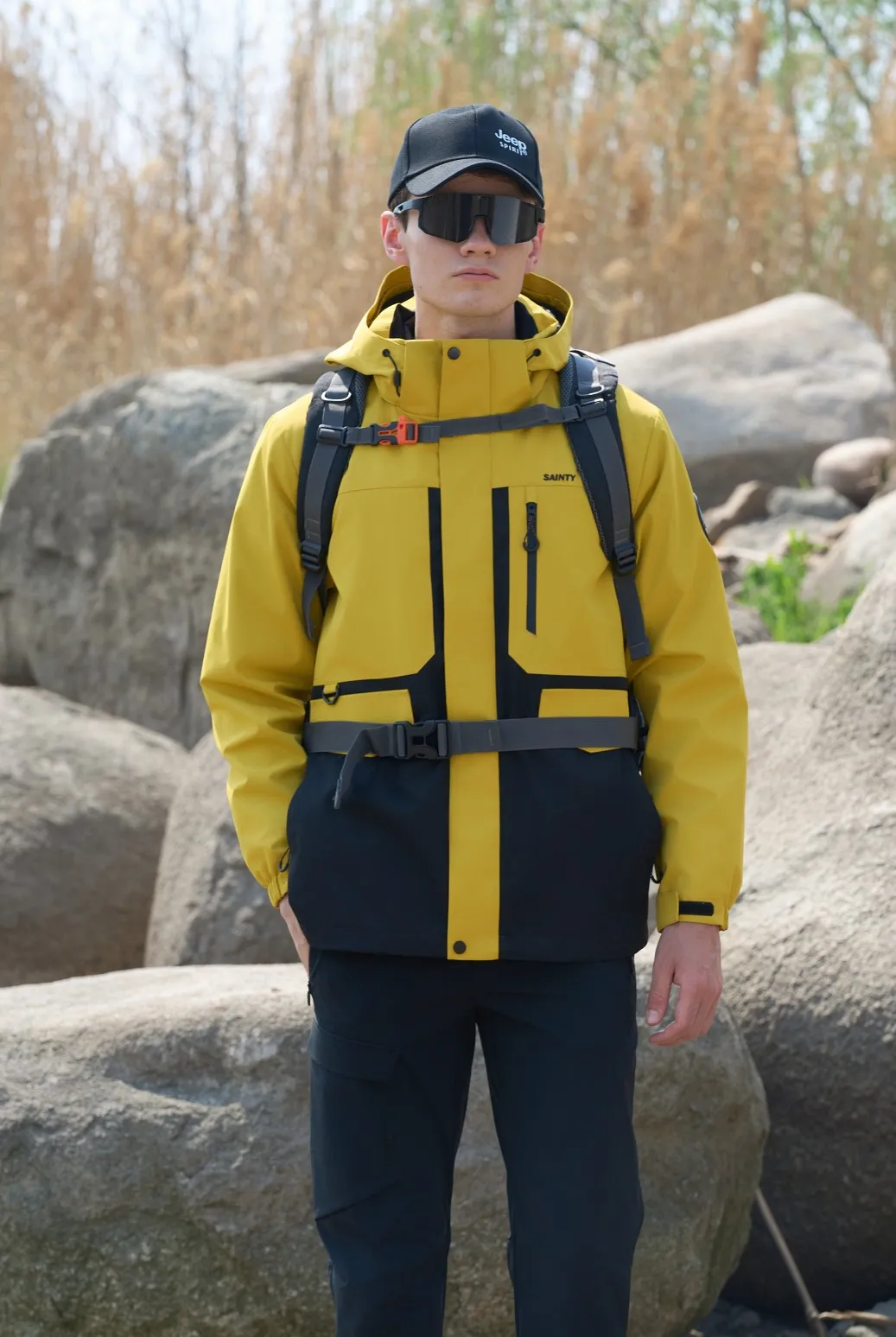
Manufacturers such as SAINTY emphasise high-density weaving and reinforced panel construction to extend the product’s life.
Seam Sealing and Waterproof Integrity
Even waterproof fabrics fail if seams are not protected.
Types of Seam Construction
| Type | Waterproof Level |
| Unsealed seams | Low |
| Critically taped seams | Medium |
| Fully taped seams | High |
Seam taping prevents water from penetrating stitching holes, which are natural weak points.
Fit and Mobility Design
A well-designed outdoor jacket strikes the right balance between protection and freedom of movement. Ergonomic pattern cutting ensures the jacket supports dynamic movement without restriction.
Design considerations include:
- Articulated sleeves for climbing or trekking
- Gusseted underarms
- Adjustable hems and cuffs
- Athletic or regular ergonomic fit options
Insulation and Thermal Regulation
The thermal performance of a jacket depends on the type of insulation used and the layering structure. Jackets may use synthetic or natural down insulation to retain heat efficiently.
Key insulation types:
- Down insulation: lightweight with a high warmth-to-weight ratio
- Synthetic insulation: retains warmth even when wet
- Hybrid systems: combine warmth and breathability
Packability and Weight Efficiency
Modern outdoor users prioritize portability.
| Jacket Type | Weight | Packability |
| Hardshell | Medium | Medium |
| Softshell | Low | High |
| Insulated | High | Low |
Lightweight technical jackets are essential for hiking and travel.
Ventilation Systems
To prevent overheating during intense outdoor activity, jackets incorporate ventilation features that regulate airflow and moisture release.
Common ventilation elements include:
- Underarm zip vents (pit zips);
- Meshlined pockets;
- Breathable membrane fabrics (e.g., ePTFE-based materials).
WeatherSpecific Adaptability
Modern outdoor jackets are designed to perform well in a variety of conditions, enabling users to adapt to changing weather.
Examples include:
- 3in1 jacket systems (shell and insulated liner);
- Packable rain shells for sudden storms;
- Adjustable hoods and storm flaps.
This adaptability makes them suitable for activities such as hiking, skiing, and traveling.
Sustainability and Material Innovation
The development of outdoor apparel is increasingly focusing on sustainability. An increasing number of brands are adopting eco-friendly materials and responsible manufacturing processes.
Innovations include:
- Recycled polyester and nylon fabrics
- PFC-free water repellent coatings
- Bluesign®approved or OEKOTEX®certified materials
- Biobased insulation alternatives
These developments reduce environmental impact while maintaining high performance standards.
FAQ: Outdoor Jacket Features
What is the most important feature in an outdoor jacket?
Waterproofing and breathability are the two most critical features for performance and comfort.
What makes a jacket truly waterproof?
A combination of membrane technology, DWR coating, and sealed seams.
Are breathable jackets actually waterproof?
Yes, but they rely on advanced membranes that block water while allowing vapor to escape.
What is the best material for outdoor jackets?
Nylon and polyester with PU or ePTFE membranes are most commonly used.
How do I choose an outdoor jacket for hiking?
Look for waterproofing (10,000 mm+), high breathability (10,000+ MVTR), and good ventilation systems.
Conclusion
To select the right outdoor jacket, it is important to understand the balance between protection, comfort, and performance engineering. Key features such as waterproofing, breathability, wind resistance, seam sealing, and ergonomic design work together to provide effective protection.
Modern textile technologies, especially membrane-based waterproof, breathable fabrics, have transformed outdoor apparel, producing jackets that are lighter, more durable, and adaptable than ever before. Manufacturers such as SAINTY are continuing to innovate in the fields of material science and garment construction to ensure that outdoor jackets meet the ever-increasing demands of professional and recreational users alike.