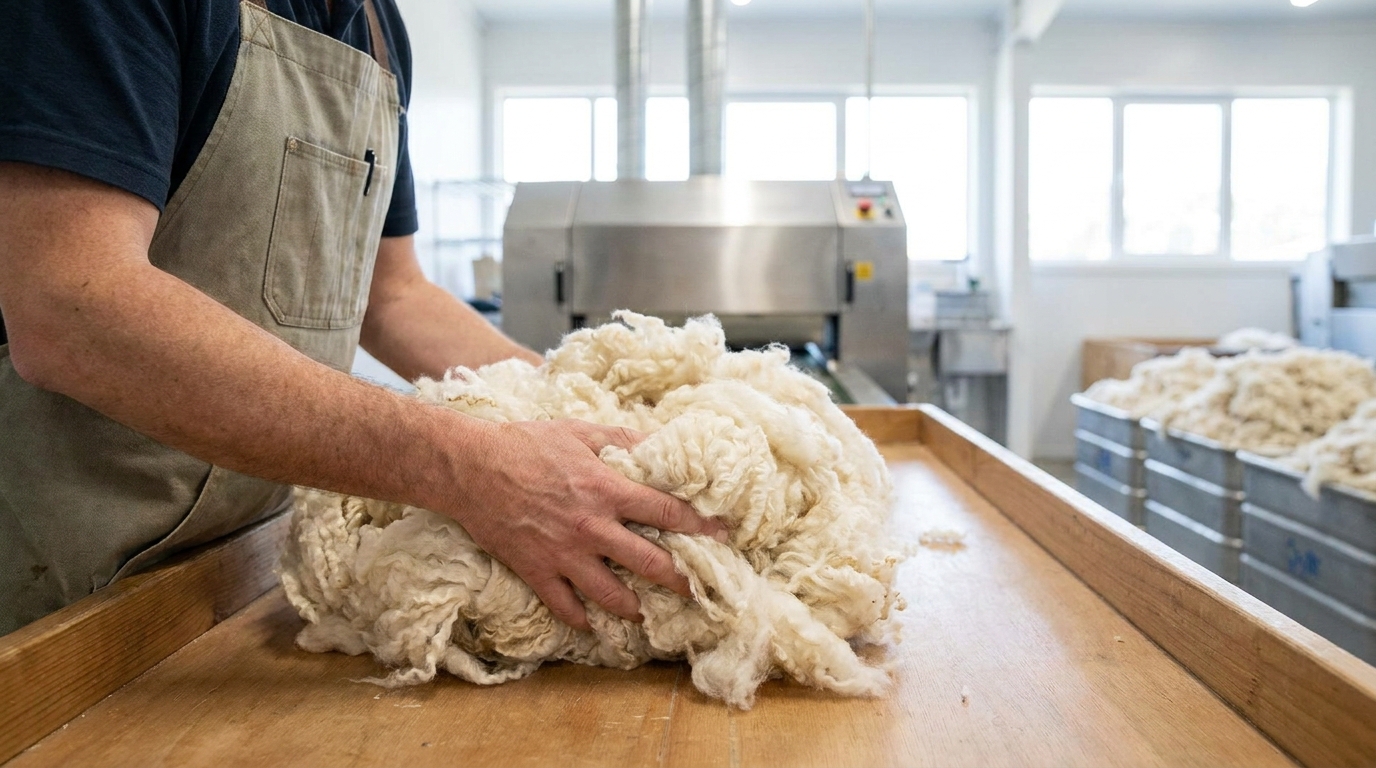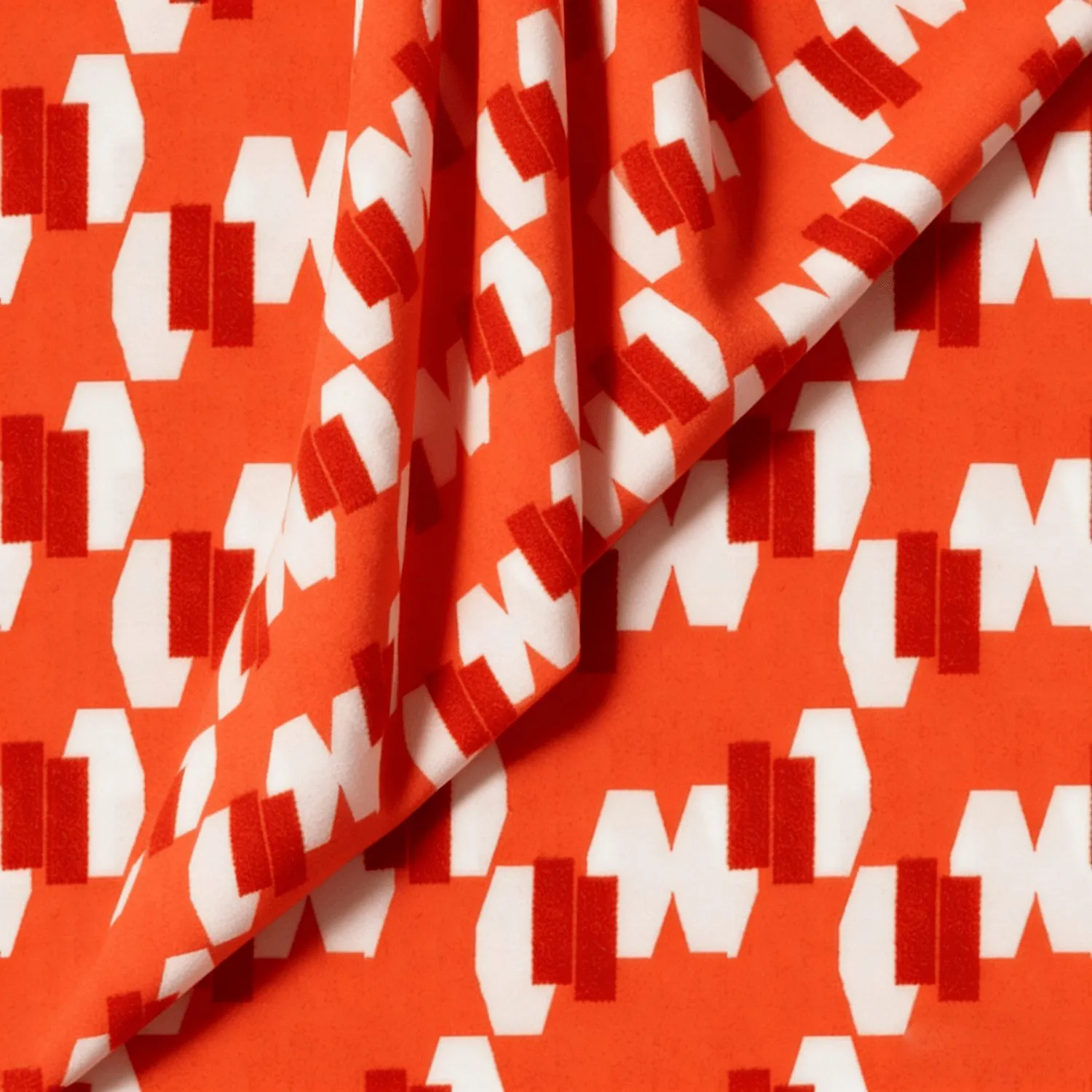
Viscose fabric is a textile made from viscose, which is a regenerated cellulose fibre produced by dissolving and chemically regenerating cellulose, most commonly derived from wood pulp. It is neither a conventional synthetic fibre, such as polyester, nor a natural fibre, such as cotton. Its appeal lies in its combination of cellulose-based chemistry with a soft texture, fluid drape, high moisture absorption, and breathable feel. Textile Exchange classifies viscose/rayon as a regenerated cellulosic fibre and the most widely used man-made cellulosic fibre. Meanwhile, EU Regulation 1007/2011 formally defines viscose as a regenerated cellulose fibre obtained through the viscose process.
What Is Viscose Fabric?
Viscose fabric is made from viscose rayon, which is a type of regenerated cellulose fibre. Therefore, the word ‘viscose’ describes the fibre rather than a particular weave or fabric construction. Viscose fabric can be woven or knitted, blended with other fibres, dyed in different ways, or finished to meet specific performance requirements.
The starting material is cellulose, a natural polymer found abundantly in plants. In conventional viscose production, cellulose-rich pulp is processed into a soluble cellulose derivative. This is then formed into a viscous spinning solution and extruded through a spinneret into a chemical bath, where the cellulose regenerates as continuous or staple fibres. Textile Exchange describes this process as cellulose from sources such as wood or cotton linters being transformed into a liquid compound, which is then regenerated into fibre.
This origin creates an important distinction when discussing textile materials. While viscose is plant-derived in its raw material origin, the fibre itself is manufactured rather than harvested directly from a plant. Cotton, for example, is a natural cellulose fibre that grows as part of the cotton plant, whereas viscose is created by dissolving and regenerating cellulose into a new fibre form.
For this reason, viscose is generally grouped with man-made cellulosic fibres (MMCFs), alongside modal and lyocell. Textile Exchange notes that MMCFs are commonly made from dissolved wood pulp, although recycled textile materials, agricultural by-products and other cellulose sources are also being developed.
How Is Viscose Fabric Made?
Understanding the manufacturing route explains why viscose fabric feels different from both cotton and polyester. Although the raw material is cellulose, the fiber’s final molecular and physical structure is determined by chemical processing, regeneration, spinning conditions, fiber geometry, and subsequent textile processing.
A simplified conventional viscose process can be described as follows:
- Cellulose pulp preparation: Wood or another cellulose-rich feedstock is processed into dissolving pulp with suitable purity and reactivity.
- Chemical conversion: The cellulose is chemically modified to create a form that can be processed into a viscous spinning solution.
- Viscose solution preparation: The cellulose derivative is converted into the characteristic viscous solution from which the process takes its name.
- Filtration and deaeration: Undissolved particles and air are removed to improve spinning consistency.
- Wet spinning: The solution is extruded through fine spinneret holes into a regeneration bath.
- Regeneration: Chemical reactions convert the extruded material back into cellulose in fiber form.
- Washing and finishing: Residual chemicals are removed, and the fiber may be cut into staple lengths or retained as filament.
- Yarn and fabric production: The fibers are spun into yarns and subsequently woven or knitted into viscose fabric.
The resulting fiber is therefore chemically related to cellulose but structurally different from the cellulose fiber originally present in wood or cotton. Research published in Textile Research Journal has shown that differences in molecular and fine structure among viscose, modal, and lyocell contribute directly to differences in mechanical and sorption behavior.
What Does Viscose Fabric Feel Like?
One of the main reasons why manufacturers use viscose is because of its soft, smooth, and fluid texture. Depending on the yarn count, how the fabric is constructed, the finishing process, and whether it is blended with other fibres, viscose can feel either silky and lightweight or relatively substantial and similar to cotton.
The fabric is particularly well known for its drape. A viscose dress, blouse, shirt, lining or flowing skirt will cling to the body without the stiffness associated with tightly woven fabrics. This behaviour stems from a combination of fibre characteristics, yarn structure, fabric construction and the flexible nature of regenerated cellulose.
Viscose can also provide a cool, comfortable sensation against the skin. Regenerated cellulose fibres have a high affinity for moisture, and viscose is recognised by Textile Exchange as absorbent and breathable. Scientific literature also suggests that the structure of viscose results in high water retention and moisture sorption compared with many other common textile fibres.
However, ‘soft’ does not mean ‘fragile in every application’, and ‘natural’ does not mean ‘high performance’. Fabric performance depends on fibre grade, yarn engineering, fabric density, finishing, blend composition and end use. Therefore, a buyer should evaluate the complete fabric specification rather than judging viscose solely by its fibre name.
What Are the Main Properties of Viscose Fabric?
Viscose occupies an interesting position between natural and synthetic textiles because it combines cellulose chemistry with industrially engineered fiber properties. Its most important characteristics are moisture absorption, softness, drape, dyeability, breathability, and relatively good comfort.
At the same time, conventional viscose has limitations in wet strength and dimensional stability that need to be considered during product development. A review of regenerated cellulose fibers notes that conventional viscose generally has lower strength than some newer regenerated cellulose fibers, with a particularly pronounced reduction in wet strength.
| Property | Typical Characteristic of Viscose Fabric | What It Means for Buyers |
| Fiber origin | Regenerated cellulose | Plant-based raw material but manufactured fiber |
| Hand feel | Soft, smooth, often silky | Suitable for next-to-skin garments |
| Drape | Excellent to very good | Useful for dresses, blouses, and flowing garments |
| Moisture absorption | High | Comfortable in many warm-weather applications |
| Breathability | Generally good | Suitable for lightweight apparel and lining |
| Dyeability | Generally very good | Supports rich colors and prints |
| Wet strength | Lower than dry strength in conventional viscose | Requires appropriate laundering and finishing |
| Dimensional stability | Depends strongly on construction and finishing | Pre-shrinkage and care testing may be important |
| Abrasion resistance | Moderate and application-dependent | Evaluate for high-friction products |
| Thermal behavior | Generally comfortable but not inherently high-temperature resistant | Processing and ironing conditions require control |
| Static tendency | Generally lower than many synthetic fibers | Can contribute to comfortable handling |
| Blending potential | High | Often blended with cotton, polyester, linen, wool or elastane |
These characteristics should not be interpreted as fixed specifications for every viscose fabric. Fiber fineness, staple length, filament construction, yarn twist, fabric GSM, weave or knit structure, dyeing, finishing, and blending can substantially change the final performance.
Is Viscose Fabric Breathable and Absorbent?
Yes, viscose fabric is generally considered breathable and highly moisture-absorbent, one of its most commercially useful characteristics. Cellulose contains numerous hydroxyl groups that readily interact with water, and it is this hydrophilic chemistry that contributes to moisture absorption. Research on cellulose-based materials also identifies the hydroxyl groups as a key factor in the material’s ability to hold and absorb water.
This can make viscose an attractive option for clothing manufacturers looking to produce summer dresses, shirts, blouses, underwear, sleepwear, scarves, and lightweight fashion fabrics. Unlike strongly hydrophobic synthetic textiles, a viscose garment can absorb moisture, which can contribute to a comfortable skin environment.
However, absorbency and drying speed are not identical properties. A fabric that readily absorbs moisture may retain it for longer than a hydrophobic fibre, so ‘highly absorbent’ does not necessarily mean ‘fast drying’. The actual drying performance of a fabric is influenced by factors such as weight, construction, fibre blend, finishing, ambient humidity, and airflow.
Is Viscose Fabric Strong and Durable?
Although viscose has useful dry strength, conventional viscose is generally not chosen when maximum mechanical durability is required. Its wet strength can decrease significantly, meaning repeated washing, mechanical agitation, and poor laundering conditions can reduce the lifespan of some lightweight viscose products.
This characteristic is linked to the fibre’s molecular and structural organisation. Compared with cotton and some newer regenerated cellulose fibres, conventional viscose has a different crystalline and amorphous structure, which gives it its characteristic balance of softness, moisture absorption and mechanical behaviour.
This does not mean that viscose garments are automatically low quality. A well-designed viscose fabric can perform very well when the yarn, fabric construction, finishing and garment care requirements are matched to the intended application. When sourcing commercially, buyers should request test data on tensile strength, tear strength, dimensional change, abrasion, pilling, colourfastness and wet performance, rather than using the fibre name as an alternative to testing.
Viscose vs Cotton: Are They the Same?
Although viscose and cotton are both cellulose-based, they are not the same type of fibre. Cotton is a natural cellulose fibre, whereas viscose is a regenerated cellulose fibre manufactured from cellulose feedstock.
While cotton generally has stronger mechanical performance than conventional viscose in several important respects, viscose is often preferred when a softer texture, more fluid drape or stronger moisture absorption is desired. The difference becomes more complex when comparing specific fabric constructions, as a high-GSM viscose twill and a lightweight cotton voile, for example, do not have equivalent performance characteristics.
This distinction is particularly important for product labelling and sourcing. A specification stating ‘100% viscose’ does not mean that the product contains synthetic plastic fibre, but it should not be marketed as natural cotton.
Viscose vs Modal vs Lyocell
Viscose, modal, and lyocell are all regenerated cellulose fibers, but they are not interchangeable terms. Their production routes, structural characteristics, performance profiles, and sustainability attributes can differ.
Modal is a modified type of regenerated cellulose fiber associated with improved wet modulus and particular softness. EU textile legislation defines modal as a regenerated cellulose fiber obtained through a modified viscose process and specifies performance-related criteria.
Lyocell, by contrast, uses a different solvent-spinning approach and has become known for its combination of strength, softness, and moisture-management potential. Comparative textile research has found differences in strength, pilling, thermal comfort, and other performance characteristics among viscose, modal, and lyocell fabrics.
| Fiber | Fiber Family | General Strength Profile | Typical Comfort Character | Common Applications |
| Viscose | Regenerated cellulose | Moderate; wet strength can be a limitation | Soft, fluid, absorbent | Dresses, shirts, blouses, lining, home textiles |
| Modal | Modified regenerated cellulose | Generally improved wet performance | Very soft, smooth | Underwear, underwear blends, T-shirts, next-to-skin products |
| Lyocell | Regenerated cellulose | Generally higher strength | Soft, smooth, moisture-friendly | Apparel, denim, active/casual wear, home textiles |
| Cotton | Natural cellulose | Generally strong and durable | Soft, breathable, absorbent | Apparel, towels, bedding, workwear |
The table is a general material comparison rather than a specification sheet. Individual fabric results can change considerably according to fiber grade, yarn engineering, fabric construction, finishing, and blend ratio.
Is Viscose Fabric Sustainable?
This is one of the most commonly misunderstood questions about viscose. Viscose is not automatically sustainable just because its raw material is cellulose or wood-based. Its environmental performance depends on where the cellulose comes from, the forestry practices used, how chemicals are managed, how much energy is consumed, how water and wastewater are treated, what recovery systems are used, what manufacturing controls are in place, and what happens to the finished textile.
Textile Exchange specifically identifies wood sourcing as a major risk area for viscose production, with potential impacts on deforestation, biodiversity, forest exploitation and indigenous peoples. It also highlights chemical emissions and wastewater as important environmental and occupational health and safety concerns associated with the production of man-made cellulosic fibres.
This is why responsible sourcing should focus on traceability and verified production practices rather than simply using the generic term ‘viscose’. Forest certification, responsible wood sourcing, chemical management, wastewater controls and credible third-party certifications can all provide more useful information when comparing suppliers.
The industry is also moving towards more controlled production systems. For instance, Lenzing has implemented ZDHC-related wastewater and responsible production practices at its viscose facilities, and Canopy evaluates regenerated cellulose producers based on criteria such as forest sourcing, traceability, chemical management, and next-generation feedstock.
Another useful distinction is between fibre biodegradability and overall textile sustainability. While Lenzing’s 2025 report cites research demonstrating the biodegradation of regenerated cellulose under various environmental conditions, it also emphasises that product-level factors, such as dyes and finishes, can impact environmental performance.
What Is Viscose Fabric Used For?
Viscose is a versatile material that can be manufactured as either a staple fibre or a filament, which can then be converted into a variety of yarns and fabrics. Its softness, drape, dyeability, and ability to absorb moisture make it particularly useful in applications where comfort and appearance are more important than maximum abrasion resistance.
Common applications include:
- Dresses and skirts: Viscose provides fluid movement and an attractive drape.
- Blouses and shirts: Lightweight viscose creates a soft, smooth texture.
- T-shirts and knitwear: Blends offer a balance of softness, strength, and dimensional stability.
- Lining fabrics: Their smooth surface and drape work well inside garments.
- Underwear and intimate apparel: Softness and moisture absorption are important qualities.
- Home textiles: Viscose can be used for decorative and comfort-oriented products.
- Blended fabrics: They can be combined with cotton, polyester, elastane, linen, wool, and other fibres to modify performance.
- Nonwoven products: Regenerated cellulose fibres are widely used in hygiene and absorbent applications. Textile Exchange identifies apparel and hygiene products as major applications for viscose.
For industrial buyers, it is important to specify the exact fabric construction rather than simply stating ‘viscose fabric’. The purchasing specification should include information on fibre content, yarn count, GSM, width, weave or knit, finishing, shrinkage, colourfastness, pilling performance and required certifications.
How Should Buyers Choose Viscose Fabric?
When it comes to textile sourcing, the best viscose fabric is not necessarily the softest sample received from a supplier. The right fabric is one whose fibre properties, construction, finishing, and testing results match the performance requirements of the final product.
A practical evaluation should begin with fibre content and construction. First, confirm whether the fabric is 100% viscose, a viscose/polyester blend, a viscose/cotton blend, a viscose/elastane blend, or another blend. Then examine the GSM, width, yarn specification, weave or knit structure, and finishing treatment.
Next, evaluate physical performance. Tensile and tear strength, dimensional stability after washing, colourfastness, pilling, abrasion resistance, air permeability, moisture behaviour, and drape are more useful indicators than subjective descriptions such as ‘premium’, ‘luxurious ‘, or ‘eco-friendly’.
Finally, assess supply-chain requirements. If sustainability is important to the end customer, request traceability information, fibre certificates, evidence of forest sourcing, documentation of chemical management, and relevant third-party certifications, rather than accepting generic claims that the fabric is ‘green’ simply because it comes from plants.
Is Viscose Fabric Good for Clothing?
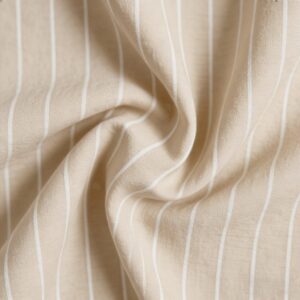
Viscose is an excellent choice for many types of clothing because it combines softness, drape, moisture absorption, and visual versatility. It is particularly effective in designs that call for a flowing silhouette, smooth surface, comfortable feel, or lightweight feel.
However, its limitations become more apparent in garments exposed to frequent high-stress washing or heavy abrasion. Designers can address these issues through fabric construction, blending, finishing, or providing garment care instructions. Alternatively, they can select a different regenerated cellulose fibre with a performance profile better suited to the application.
The broader lesson is that fibre selection should follow product requirements rather than fashion terminology. A well-engineered viscose fabric can outperform a poorly engineered fabric made from another fibre, and a high-performance application may justify the use of modal, lyocell, cotton, polyester or a blend.
Frequently Asked Questions About Viscose Fabric
- What kind of fabric is viscose?
Viscose is a regenerated cellulose fiber commonly made from cellulose-rich pulp, often wood pulp. It is a manufactured cellulosic fiber rather than a natural fiber such as cotton or a synthetic fiber such as polyester.
- Is viscose a natural or synthetic fabric?
Viscose is best classified as a regenerated or man-made cellulosic fiber because its cellulose raw material can come from plants, but the fiber is manufactured through a chemical regeneration process. It is therefore different from both naturally occurring cotton fiber and petroleum-based synthetic fibers.
- Is viscose fabric good for summer?
Yes, viscose is commonly used for summer clothing because it is lightweight, absorbent, breathable, and capable of producing a soft, flowing drape. The actual coolness and moisture performance still depend on fabric weight, construction, finishing, and garment design.
- Is viscose better than cotton?
Neither fiber is universally better because they solve different textile requirements. Cotton generally offers stronger durability, while viscose is often preferred for softness, fluid drape, and high moisture absorption.
- Does viscose fabric shrink?
Viscose fabrics can experience dimensional change during washing, particularly when fabric construction and finishing are not adequately controlled. Buyers should evaluate shrinkage after the intended laundering procedure rather than assuming that all viscose fabrics will shrink by the same amount.
- Is viscose fabric eco-friendly?
Viscose can have environmental advantages because it is a cellulose-based fiber, but generic viscose should not automatically be considered sustainable. Forest sourcing, chemical recovery, wastewater management, energy use, certification, and manufacturing practices determine much of its environmental profile.
Conclusion
Viscose fabric is a regenerated cellulose textile renowned for its softness, fluid drape, moisture absorption, breathability, and ability to hold strong colours. It is fundamentally different from both cotton and petroleum-based synthetic fibres due to its unique combination of plant-derived cellulose and an industrial manufacturing process.
For apparel manufacturers and textile buyers, viscose is an excellent material for dresses, blouses, shirts, knitwear, underwear, linings and other products designed for comfort. However, its principal limitations, such as wet-strength loss, dimensional behaviour and application-dependent durability, should be addressed through fabric construction, finishing, blending and performance testing, rather than being treated as reasons to reject the fibre altogether.
The question of sustainability also requires a more sophisticated answer than ‘viscose comes from trees’. Responsible wood sourcing, chemical management, wastewater treatment, traceability, certification and the use of next-generation or recycled feedstocks all influence the environmental impact of viscose production.
Therefore, the most useful specification for a buyer is not simply ‘viscose fabric’. It should specify the fibre composition, yarn and fabric construction, GSM, width, finishing, dimensional stability, colourfastness, strength, pilling and abrasion resistance, certifications and intended end use. This approach transforms viscose from a generic fibre label into a measurable and commercially reliable textile specification.