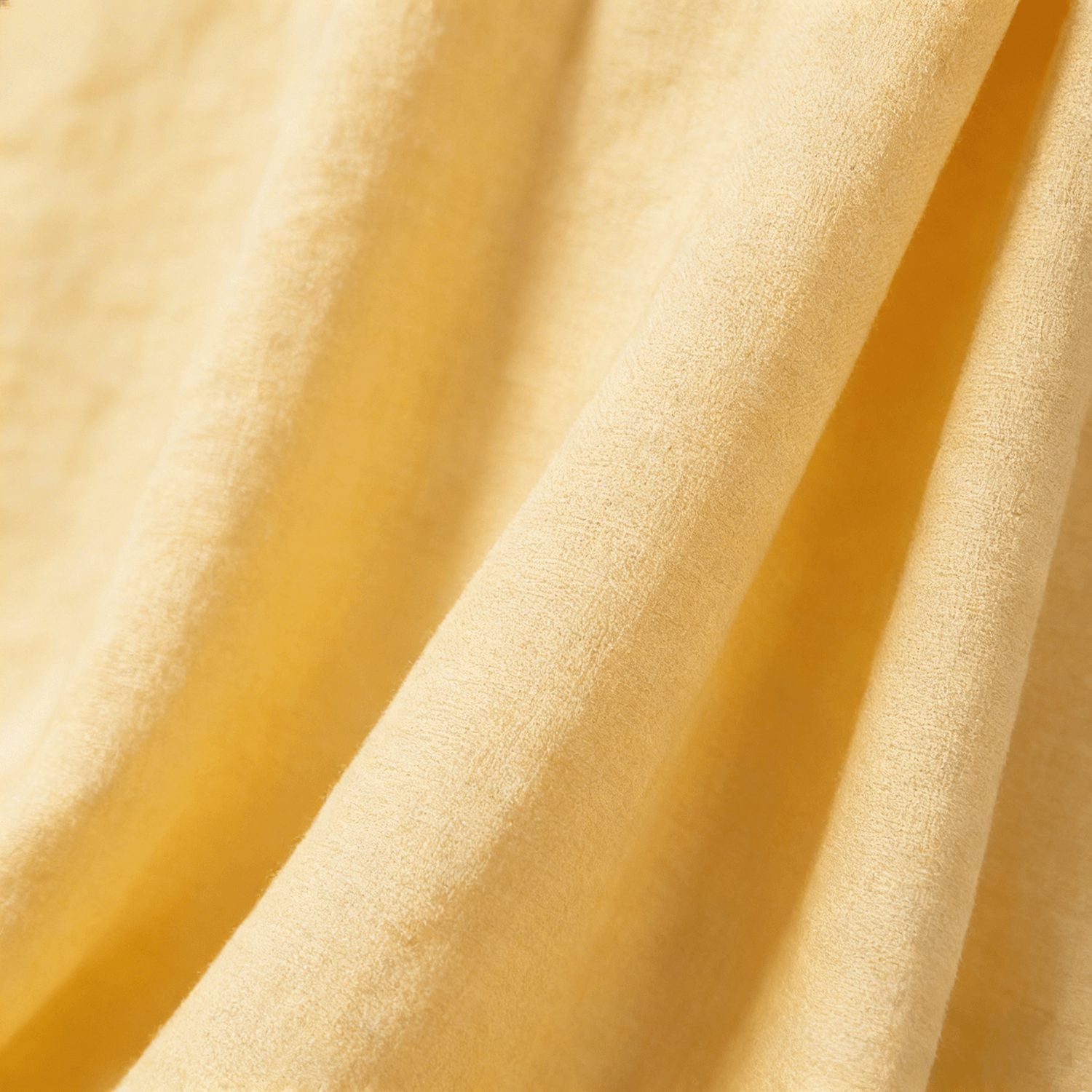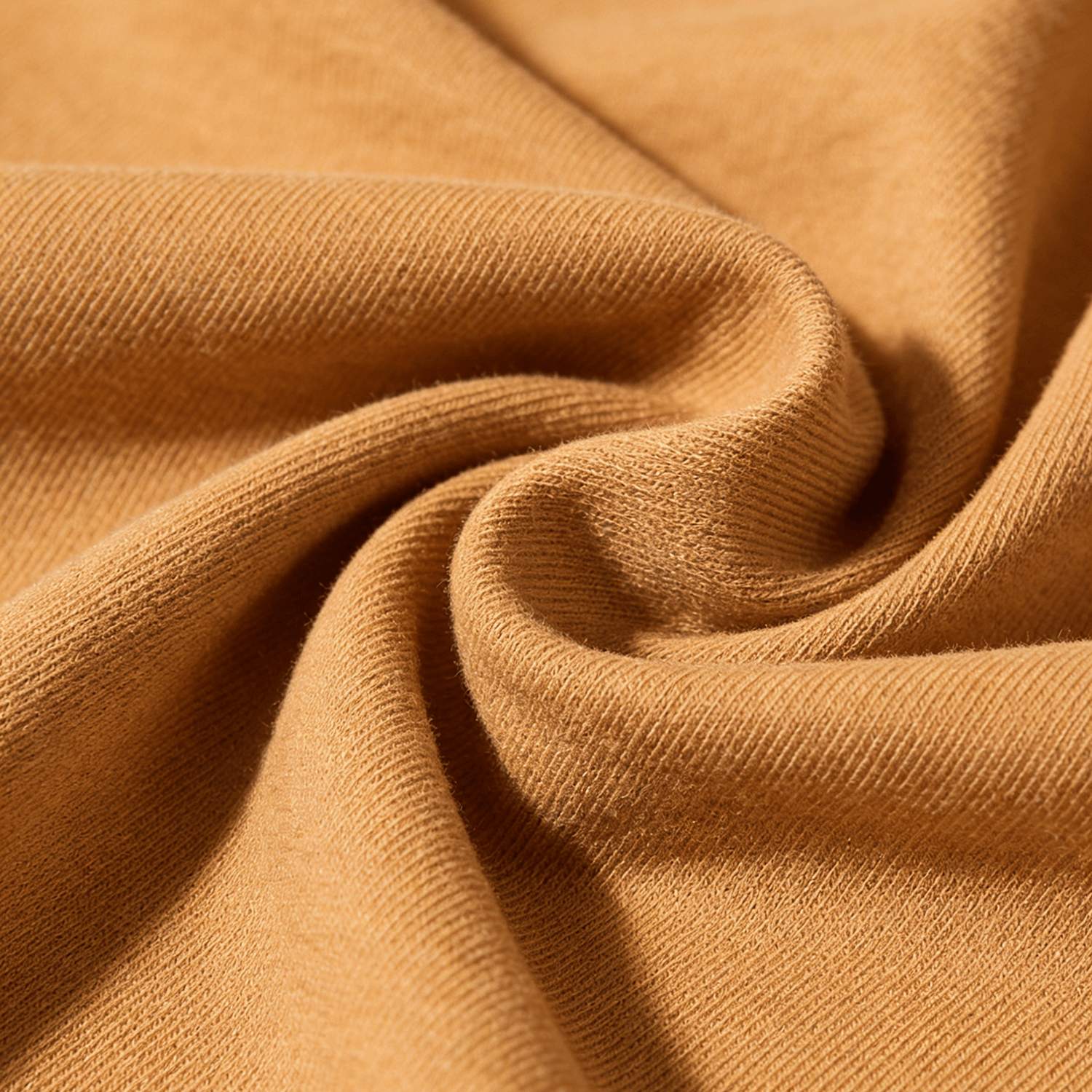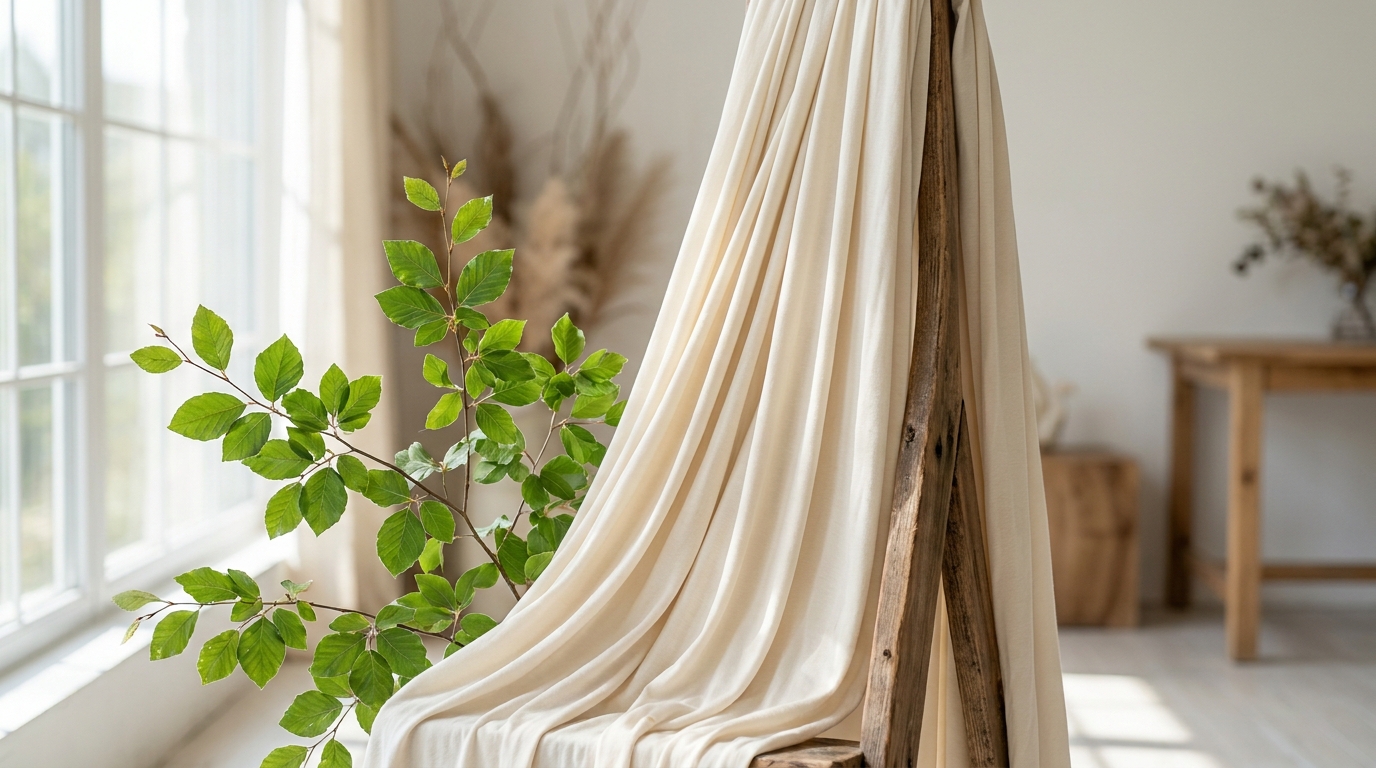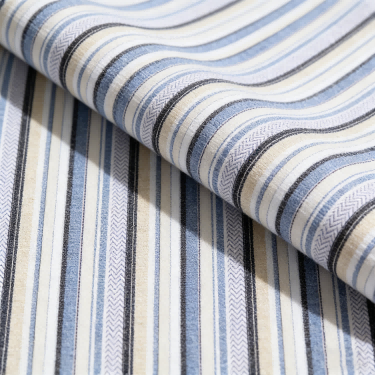
Rayon fabric is an excellent choice for textiles when softness, a fluid drape, moisture absorption, dyeability, and comfort are more important than maximum durability or ease of care. As a regenerated cellulose fibre, rayon combines a cellulose-based composition with engineered fibre properties. However, conventional viscose rayon can lose a lot of its strength when wet, so its suitability depends heavily on the intended application. This assessment is supported by the U.S. Federal Trade Commission’s Textile Fibre Products Identification Rules and the textile reference Regenerated Cellulose in Textiles: Rayon, Lyocell, Modal and Other Fibres, published by Elsevier in Fundamentals of Natural Fibres and Textiles.
What Is Rayon Fabric?
Rayon fabric is made from regenerated cellulose, meaning cellulose from a natural source is processed into a dissolvable form and regenerated into textile fibres. The U.S. Federal Trade Commission defines rayon as a manufactured fibre composed of regenerated cellulose. This is an important distinction because, although the starting material can come from plants or wood, the resulting textile fibre is legally classified as rayon rather than the original plant material.
This distinguishes rayon from both conventional natural fibres and petroleum-based synthetic fibres. Cotton, for instance, is a natural cellulose fibre that grows directly around the cotton seed, whereas polyester is produced from synthetic polymers. Rayon begins with cellulose, but an industrial regeneration process is used to convert the cellulose into a form that can be spun into usable textile fibres. Modern textile literature classifies rayon, modal, lyocell and cupro as part of the broader family of regenerated cellulose fibres, despite their manufacturing processes and properties differing considerably.
The term ‘rayon’ also encompasses more than one specific material technology. Conventional viscose rayon is the most widely recognised form, while specialised regenerated cellulose fibres have been developed to improve wet strength, dimensional stability, environmental performance or other properties. Therefore, when evaluating rayon fabric for a commercial application, it is more useful to identify the exact fibre type and fabric construction than to treat every rayon product as if it has identical performance properties.
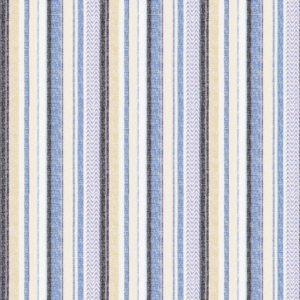
Rayon Linen Cotton Printed Stripe Fabric Natural Vintage Finish
Is Rayon a Good Fabric?
Yes, rayon fabric is excellent, particularly for apparel and home textile applications where softness, an elegant drape, moisture management and a vibrant colour are desirable. Textile references describe rayon as soft, versatile, and highly absorbent, making it ideal for woven fabrics with a fluid drape. This explains why it is still used in dresses, blouses, skirts, linings, shirts and scarves, as well as other products where comfort and appearance are priorities.
However, it is important to note that rayon is not universally superior. Conventional viscose rayon generally has lower wet strength than cotton and several newer regenerated cellulose fibres. This means that repeated washing, aggressive mechanical action, or prolonged exposure to water can pose more of a challenge than with stronger textile materials. A 2024 review reports a typical moisture regain of approximately 11–14% for viscose rayon and a substantially lower wet tenacity than cotton. However, it also highlights the material’s softness and drapability.
Therefore, rayon is a good choice when its strengths match the application. For example, if a manufacturer needs a cool, soft, flowing fabric for fashion garments, rayon can be a very attractive option. However, if the priority is exceptional abrasion resistance, dimensional stability, or low-maintenance laundering, then another fibre or a rayon blend may be more appropriate.
Main Advantages of Rayon Fabric
- Soft and Comfortable Hand Feel
One of the strongest reasons manufacturers and designers choose rayon fabric is its comfortable hand feel. Rayon fibers can produce fabrics that feel smooth and soft against the skin, making them particularly attractive for garments designed for prolonged wear.
The softness is closely related to the structure of regenerated cellulose fibers and the way the resulting yarn and fabric are constructed. Depending on yarn fineness, weave or knit structure, finishing, and fiber type, rayon can range from lightweight and silky to relatively substantial and opaque. This versatility allows fabric producers to adapt rayon to very different product concepts rather than being restricted to one characteristic appearance.
- Excellent Drape
Rayon is particularly well known for fluid drape. It can fall naturally around the body instead of creating the comparatively crisp or structured silhouette associated with some cotton or synthetic fabrics.
This property makes rayon useful for dresses, skirts, blouses, wide-leg trousers, scarves, and fashion fabrics where movement is part of the visual effect. Textile literature specifically identifies good drape and softness as important advantages of rayon, while regenerated cellulose research connects fiber structure and elongation with the characteristic flexibility of these materials.
- Good Moisture Absorption
Rayon is hydrophilic, so it has a considerably higher moisture regain than many common synthetic fibers. A recent review lists typical moisture regain for viscose rayon at approximately 11–14%, compared with roughly 7–8% for cotton and much lower values for polyester.
For clothing manufacturers, this characteristic can contribute to a comfortable feel in warm conditions because the fabric interacts readily with moisture. It also makes rayon useful in products where absorbency and a less plastic-like hand are desired.
However, high moisture absorption is not an unconditional advantage. Water also affects the mechanical behavior of conventional viscose rayon, which is why wet handling and laundering performance must be considered during product development.
- Excellent Dyeability and Color Appearance
Rayon generally accepts dyes well and can produce strong, attractive colors. This is one reason it remains popular in fashion textiles, where manufacturers may need saturated shades, smooth coloration, or specific visual effects.
Its dyeability also gives fabric developers considerable freedom when designing seasonal collections. The final appearance still depends on fiber grade, dye class, pretreatment, fabric construction, dyeing conditions, and finishing, so “rayon dyes well” should not be interpreted as meaning that every rayon fabric will have identical colorfastness.
- Versatile Fabric Design
Rayon can be produced in different yarn and fabric constructions, allowing manufacturers to create lightweight woven materials, flowing fashion fabrics, blended textiles, linings, and selected nonwoven structures. ScienceDirect’s textile reference describes rayon as a versatile regenerated cellulose fiber with applications across apparel and other textile areas.
This versatility is commercially valuable because the same broad fiber family can be adapted through yarn count, blending, fabric density, finishing, and construction. For B2B buyers, the relevant specification is therefore not simply “rayon fabric,” but the exact composition and performance profile of the supplied fabric.
Rayon Fabric vs. Cotton, Polyester and Lyocell
The best way to understand rayon is to compare it according to performance priorities rather than simply asking which fiber is best.
| Property | Rayon | Cotton | Polyester | Lyocell |
| Fiber category | Regenerated cellulose | Natural cellulose | Synthetic polymer | Regenerated cellulose |
| Softness | Excellent | Good to excellent | Good, depending on construction | Excellent |
| Drape | Excellent | Moderate to good | Moderate to good | Excellent |
| Moisture regain | High | Moderate | Very low | High |
| Wet strength | Relatively low for standard viscose | Generally good | High | Generally higher than viscose |
| Dyeability | Excellent | Excellent | Good with suitable dyes | Excellent |
| Breathability/comfort | Generally good | Excellent | Depends strongly on fabric | Generally good |
| Durability | Moderate | Good | Very good | Good to very good |
| Typical positioning | Soft, flowing, comfortable textiles | Durable natural comfort | Easy-care, durable textiles | Premium regenerated cellulose |
| Common uses | Dresses, blouses, linings, fashion fabrics | Shirts, denim, bedding, workwear | Sportswear, uniforms, outerwear | Apparel, premium fashion, active and home textiles |
The comparison shows why there is no universal “best” fabric. Rayon occupies an attractive middle ground: it provides many of the comfort and moisture-related characteristics associated with cellulose fibers while offering the manufacturing flexibility of a regenerated fiber.
Lyocell, however, should not simply be treated as another name for conventional rayon. Both belong to the regenerated-cellulose family, but their production processes and performance profiles differ, with lyocell generally offering stronger mechanical properties and better wet performance than conventional viscose.
Major Applications of Rayon Fabric
- Fashion Apparel
Fashion is arguably the most recognizable application for rayon fabric. Dresses, blouses, skirts, shirts, jumpsuits, trousers, and scarves can all benefit from its soft hand and flowing drape.
Designers often select rayon when they want fabric movement rather than a rigid silhouette. Lightweight rayon is particularly suitable for warm-weather garments because its moisture absorption and soft surface can contribute to a comfortable wearing experience.
- Lining and Inner Garments
Rayon is also used in linings and garments that require a smooth, comfortable surface. Its relatively smooth hand and ability to drape easily make it suitable for products where the textile needs to move comfortably against another fabric or the skin.
The exact performance requirement is important here. For high-abrasion applications, manufacturers may use rayon blends or alternative fibers to increase durability while preserving some of rayon’s softness.
- Home Textiles
Rayon and regenerated cellulose fibers can also appear in selected home-textile applications, including decorative fabrics, bedding-related products, curtains, and blended furnishings. In these applications, appearance and hand feel may be more important than maximum mechanical strength.
For commercial home textiles, however, abrasion resistance, dimensional stability, laundering conditions, and applicable performance standards should be tested before selecting a rayon construction.
- Nonwoven and Technical Applications
The application range extends beyond conventional clothing. Regenerated cellulose fibers, including rayon, can be processed into nonwoven structures used in medical, cosmetic, and industrial products. ScienceDirect specifically notes the use of spunbond rayon nonwovens in medical, cosmetic, and industrial applications because of their softness and hydrophilic characteristics.
This is an important point for industrial buyers because it demonstrates that rayon is not simply a “fashion fiber.” Its combination of cellulose chemistry, moisture interaction, softness, and processability gives it opportunities in functional textile structures as well.

How to Choose the Right Rayon Fabric?
When sourcing rayon fabric, the first step should be to identify the intended use. Ideally, a supplier should provide information on the fibre composition, yarn specifications, fabric weight, construction, width, finishing, shrinkage, colourfastness, strength and relevant test results, rather than making the generic statement that the material is ‘high-quality rayon’.
When buying rayon fabric for garments, particular attention should be paid to drape, hand feel, opacity, shrinkage, colourfastness, pilling, seam performance and washing behaviour. For home or technical applications, factors such as abrasion resistance, dimensional stability, tensile performance, wet strength and repeated-use durability may be more important.
Blending is another practical solution. Rayon can be blended with polyester, cotton, elastane, or other fibres to balance softness, moisture behaviour, stretch, strength, dimensional stability, and cost. The objective is not to maximise the rayon percentage, but to create a fabric whose overall performance meets the product specifications.
Is Rayon an Environmentally Friendly Fabric?
This question requires a more nuanced answer than a simple yes or no.
Rayon starts with cellulose, a renewable biological polymer, and regenerated cellulose fibres have attracted considerable attention because they combine the versatility of textiles with cellulose-based chemistry. Academic reviews highlight renewability and potential biodegradability as key attractions of regenerated cellulose fibres.
However, the origin of the cellulose does not automatically equate to environmentally friendly manufacturing. Conventional viscose production can involve hazardous chemicals, and its environmental impact depends on pulp sourcing, chemical recovery, energy consumption, wastewater treatment, emissions control, manufacturing efficiency, and end-of-life conditions. Research into regenerated cellulose increasingly focuses on alternative solvent systems and improved process efficiency, as conventional methods have limitations.
Therefore, environmental claims relating to sourcing should be supported by traceability, manufacturing certifications, information on chemical management, wastewater controls, and, where applicable, recycled or certified cellulose sourcing, as well as verifiable product-level data. A fabric should not be labelled as sustainable simply because the word ‘cellulose’ appears in its fibre composition.
When Should You Choose Rayon Fabric?
Rayon is particularly suitable for products that require softness, fluid drape, moisture absorption, attractive dyeing, and comfortable wear. This combination makes it ideal for fashion apparel and selected home and nonwoven applications.
However, it is less suitable when the primary requirement is maximum wet strength, exceptional abrasion resistance, low maintenance, or stable dimensions. In these cases, cotton, polyester, lyocell, modal, or engineered blends may offer a better balance of properties depending on the desired performance.
Therefore, the decision should be based on measurable requirements rather than general statements such as ‘rayon is good’ or ‘rayon is bad’. In professional textile sourcing, a more pertinent question is which rayon construction provides the required performance at the target cost and processing conditions.
Rayon Fabric: Key Advantages and Limitations at a Glance
| Aspect | Advantage or limitation | Practical implication |
| Softness | Advantage | Suitable for comfortable apparel and skin-contact textiles |
| Drape | Major advantage | Excellent for dresses, skirts and flowing garments |
| Moisture absorption | Advantage | Supports comfortable, hydrophilic fabric constructions |
| Dyeability | Advantage | Suitable for vivid and fashionable colors |
| Wet strength | Limitation in conventional viscose | Requires appropriate washing and processing controls |
| Dimensional stability | Moderate and construction-dependent | Pre-shrinkage and finishing may be important |
| Abrasion resistance | Moderate | May require blending for demanding applications |
| Sustainability | Process-dependent | Evaluate the complete manufacturing system |
| Cost | Often competitive | Depends on fiber grade, construction, and finishing |
| Versatility | Major advantage | Can be woven, knitted, blended, or processed into nonwovens |
FAQ: Rayon Fabric
- Is rayon fabric good quality?
Rayon can be a high-quality fabric when its construction and finishing match the intended application. It is particularly valued for softness, drape, moisture absorption, and dyeability.
- Is rayon better than cotton?
Rayon is not universally better than cotton because the two fabrics have different performance profiles. Rayon generally offers softer drape, while cotton often provides better wet strength and familiar durability.
- Is rayon fabric breathable?
Rayon is generally considered comfortable and moisture-absorbent because regenerated cellulose fibers are hydrophilic. Actual breathability depends strongly on fabric weight, construction, porosity, and finishing.
- Is rayon durable?
Standard viscose rayon is moderately durable but is generally less robust when wet than polyester and some stronger regenerated cellulose fibers. Fabric construction, blending, finishing, and laundering conditions can significantly change its practical durability.
- Does rayon shrink?
Rayon can experience dimensional changes and shrinkage, particularly when processing and washing conditions are not properly controlled. Pre-shrinking, fabric finishing, garment construction, and care instructions can help manage this issue.
- What is rayon fabric mainly used for?
Rayon is widely used for dresses, blouses, skirts, shirts, scarves, linings, and other fashion textiles requiring softness and fluid drape. Regenerated rayon fibers are also used in selected nonwoven medical, cosmetic, and industrial applications.
Conclusion
Is rayon a good fabric? Yes, but its value comes from a combination of properties rather than one universal performance advantage. Rayon is especially strong in terms of softness, drape, moisture absorption, dyeability, and comfort, which explains its long-standing use in clothing and its continued use in home textiles and nonwovens.
However, its limitations are equally important. Conventional viscose rayon has relatively poor wet strength and is more dimensionally sensitive than some competing fibres. The environmental profile of rayon also depends heavily on how the cellulose is sourced and how the regeneration process is managed.
Therefore, the best approach for manufacturers, importers, textile wholesalers and product developers is to evaluate rayon fabric according to the final application, taking into account factors such as required drape, moisture behaviour, strength, shrinkage, abrasion resistance, colourfastness, washing conditions, sustainability requirements and target cost. When these criteria align with rayon’s strengths, it remains a highly versatile and commercially valuable textile material.